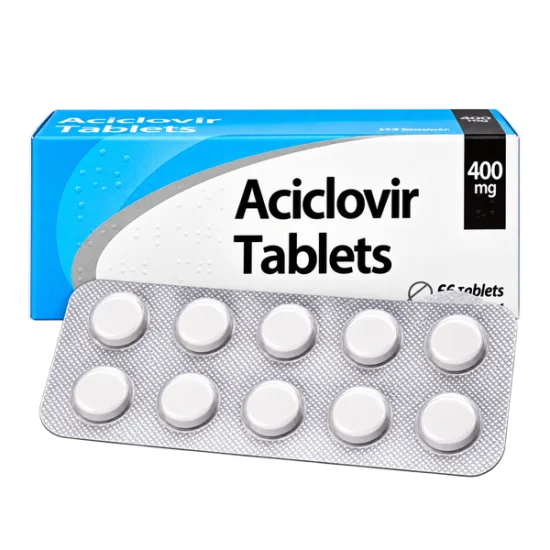
Wendy, 26 - Hastings, used the 400 mg tablets as prescribed for the prescribed duration for a recurrent cold sore. She started at the first tingling and felt the blister was less troublesome than usual within several days. She still had some lip tenderness afterwards.
Aciclovir helps manage herpes simplex and varicella-zoster infections, including cold sores, genital herpes, shingles and chickenpox. Its active ingredient slows viral DNA replication, with the greatest benefit when treatment begins early.
Overview
Aciclovir is an antiviral nucleoside analogue used against herpes simplex virus and varicella-zoster virus. Acyclovir is the alternative international spelling for the same active ingredient. The medicine reduces viral replication, which may shorten an outbreak and ease symptoms, but it does not remove dormant herpes viruses from the body.
Aciclovir tablets contain the active ingredient and are taken by mouth. The regimen for the chosen tablet strength is confirmed with a healthcare professional before starting because treatment differs between cold sores, genital herpes, shingles, chickenpox and prevention of recurrent infection.
Active Ingredient and Pharmacological Class
A nucleoside analogue resembles one of the building blocks used to make viral DNA. After activation inside infected cells, aciclovir interferes with the virus’s ability to copy its genetic material. This action gives aciclovir activity against herpes simplex virus type 1, herpes simplex virus type 2 and varicella-zoster virus.
The medicine has a stronger effect in infected cells because viral enzymes help activate it. Uninfected cells activate much less aciclovir, which supports its antiviral selectivity.
Treatment Goals and Limitations
Treatment aims to reduce the length or severity of an outbreak, relieve symptoms and limit viral multiplication. In people with frequent genital herpes recurrences, a prescriber may use suppressive treatment to reduce recurrence frequency.
Aciclovir does not eradicate latent herpes infection. It does not guarantee that an outbreak will not return, and symptom improvement does not prove that transmission is impossible.
Formulation
Aciclovir tablets contain the active ingredient and are taken by mouth. The regimen for the chosen tablet strength is confirmed with a healthcare professional before starting.
Active Ingredient and Pharmacological Class
A nucleoside analogue resembles one of the building blocks used to make viral DNA. After activation inside infected cells, aciclovir interferes with the virus’s ability to copy its genetic material.
Therapeutic indications
Conditions Treated by Aciclovir
Aciclovir may be prescribed for several herpes-family infections. The treatment pattern depends on the site of infection, severity, immune status and whether the episode is a first infection or a recurrence.
| Condition | Main virus and clinical aim |
|---|---|
| Cold sores | HSV-1; reduce viral replication and shorten symptoms when started early |
| Genital herpes | HSV-1 or HSV-2; treat a first episode, recurrence or repeated outbreaks |
| Shingles and chickenpox | Varicella-zoster virus; reduce viral activity when medical treatment starts promptly |
Cold Sores and Herpes Simplex
Cold sores commonly appear as painful blisters around the lips or face. Aciclovir treatment is most useful when started during early tingling, burning or itching, before blisters have fully developed.
Oral treatment may be selected when outbreaks are extensive, severe, recurrent or associated with a higher-risk medical situation. Topical and oral options serve different purposes, so the formulation should match the clinical advice given for the outbreak.
Genital Herpes
Genital herpes can cause painful blisters, ulcers, burning during urination and tender lymph nodes. Aciclovir may be used for a first episode, episodic treatment of recurrences or longer-term suppression when outbreaks are frequent.
A first genital outbreak deserves clinical assessment because symptoms can overlap with other conditions. During visible lesions or warning symptoms such as tingling, avoid sexual contact. Barrier protection can lower transmission risk but does not eliminate it, and transmission can occur without visible lesions. A clinician can confirm the diagnosis. Testing may guide treatment and partner counselling.
Shingles and Chickenpox
Shingles is caused by reactivation of varicella-zoster virus. Prompt medical assessment matters because treatment benefit depends on timing, and complications can involve the eye, nervous system or other organs.
Seek urgent medical care for a rash near the eye, facial weakness, severe headache, confusion, neck stiffness, widespread blistering or marked pain. People with reduced immunity need prompt assessment even when the rash initially appears limited. Aciclovir may also be prescribed for chickenpox in selected patients.
Clinical guidance from the WHO and NICE, together with national treatment resources, supports early assessment of shingles, especially in older adults and people with immune suppression [2].

Dosage and administration
Aciclovir Dosage and Administration
The regimen for the chosen tablet strength is confirmed with a healthcare professional before starting. The chosen schedule depends on:
- the infection being treated;
- whether the episode is a first infection, recurrence or suppression plan;
- age and body function;
- immune status;
- kidney function;
- other medicines being taken;
- the formulation prescribed.
Take the tablets exactly at the prescribed intervals. Swallow them with water unless the prescriber has given different instructions. Regular fluid intake supports kidney handling of the medicine, especially during illness, fever or reduced appetite.
Do not create a universal schedule from someone else’s prescription. A schedule used for recurrent genital herpes may differ from one used for shingles or chickenpox.
Early Treatment Timing
Starting treatment at the first recognised symptoms often gives the best chance of reducing viral replication. For cold sores, this may mean the tingling or burning stage. For recurrent genital herpes, treatment is commonly started at the earliest warning sign according to the individual plan.
Shingles requires a prompt medical assessment rather than waiting several days to see whether the rash settles. Eye symptoms, extensive rash and immune suppression increase the need for urgent review.
Kidney Function and Hydration
Aciclovir is removed mainly through the kidneys. People with chronic kidney disease, dehydration or advanced age may need a modified regimen. Older adults can have reduced kidney function without obvious symptoms, so a prescriber may review kidney results before selecting the treatment plan.
Tablet Handling and Missed Doses
Swallow each tablet as instructed. Do not crush, split or alter a tablet unless the product instructions or prescriber specifically permit it.
After a missed dose, take it when remembered unless the next scheduled dose is close. If the next dose is due soon, skip the missed dose and continue with the regular timetable. Do not double the next dose unless a healthcare professional gives that instruction.
When this is not for you
NOT for you if: you have had a serious allergic reaction to aciclovir or valacyclovir, or a clinician has identified a safer option for your condition.
Possible side effects
Aciclovir Side Effects and Safety Precautions
Common adverse effects can include headache, nausea, diarrhoea and tiredness. Mild symptoms may settle while treatment continues, but persistent vomiting or diarrhoea can increase dehydration risk.
Common Adverse Effects
Possible effects include:
- headache;
- nausea or stomach discomfort;
- diarrhoea;
- tiredness;
- dizziness;
- skin irritation or rash.
Take fluids regularly unless a prescriber has restricted fluid intake for another medical reason. Contact a healthcare professional if symptoms prevent drinking, become severe or continue after treatment ends.
Serious Reactions and Allergy Symptoms
Stop and seek urgent medical help for facial swelling, swelling of the lips or tongue, breathing difficulty or a rapidly spreading allergic rash. Very low urine output can indicate a serious kidney problem.
Confusion, hallucinations, severe drowsiness, agitation, tremor or seizures require urgent assessment. These neurological effects are more concerning when kidney function is reduced because aciclovir can accumulate.
One detail patients often miss: new confusion during antiviral treatment is not simply a sign of being tired. In an older person or someone with kidney disease, it can signal medicine accumulation.
Interactions and Patient Risk Factors
Give the prescriber or pharmacist a complete list of medicines, vitamins and supplements. Extra care may be needed with medicines that affect kidney function or with other treatments that can cause dehydration.
Risk is higher in people with kidney disease, older adults, those with reduced immunity and patients who cannot maintain fluid intake. A history of neurological disease may also affect the safety assessment.
Regulatory safety information from Medsafe describes kidney and neurological adverse effects as clinically significant concerns, especially when risk factors are present [3].
How it affects the body
Mechanism of Action of Aciclovir
Aciclovir follows a sequence of activation and inhibition:
- A herpes virus enzyme called thymidine kinase begins activating aciclovir inside an infected cell.
- Cellular enzymes convert it into aciclovir triphosphate.
- The active form competes with natural DNA building blocks.
- Viral DNA polymerase is inhibited, slowing production of new viral DNA.
- Viral replication falls, allowing the immune system to gain better control of the infection.
This mechanism explains why aciclovir acts most directly on actively replicating herpes viruses. The antiviral effect is less relevant to dormant virus particles between outbreaks. Kidney function also affects how aciclovir leaves the body, so renal impairment can require a different regimen or closer monitoring [1].
Clinical evidence and regulatory information from the EMA, FDA and Medsafe describe aciclovir as active against herpes simplex virus and varicella-zoster virus. Medsafe information for aciclovir products also emphasises dose adjustment and hydration in people at risk of accumulation.
Common mistakes
Common Aciclovir Mistakes and Misconceptions
Several practical errors can reduce treatment benefit:
- Waiting several days before starting: early treatment is usually more useful than delayed treatment.
- Using another person’s schedule: dose frequency varies by infection, kidney function and immune status.
- Stopping after the first improvement: symptoms can improve before the planned course is complete.
- Doubling a missed dose: this can increase adverse-effect risk without reliably improving antiviral control.
- Ignoring hydration: dehydration can place extra stress on the kidneys.
- Failing to mention kidney disease: renal impairment can change how long aciclovir remains in the body.
- Assuming herpes has been eradicated: aciclovir controls replication but does not remove latent virus.
- Assuming symptom relief ends transmission: viral shedding may continue after lesions improve.
A recurring practical problem is confusing a shorter outbreak with complete elimination of the infection. Those are different outcomes.
Comparison
Aciclovir and Valacyclovir Comparison
Aciclovir and valacyclovir are related antiviral options. Valacyclovir is converted into aciclovir in the body and generally reaches higher aciclovir exposure after oral administration, which can allow less frequent dosing for some conditions.
| Feature | Aciclovir | Valacyclovir |
|---|---|---|
| Active substance | Aciclovir | Valacyclovir, converted to aciclovir |
| Practical dosing | May require several daily doses, depending on the infection | May allow less frequent dosing in selected regimens |
| Main limitation | Regular dosing can be difficult for some people | Kidney function and dose selection still require attention |
Pharmacokinetic Differences
Pharmacokinetics describes what the body does to a medicine, including absorption, distribution and removal. Aciclovir has limited oral absorption, while valacyclovir acts as a prodrug that improves delivery of aciclovir after swallowing.
Less frequent dosing may make adherence easier, but it does not make valacyclovir suitable for every patient. Both options require attention to kidney function, hydration and the condition being treated. One is not universally preferable.
Choice of Antiviral
A clinician may select aciclovir because its active ingredient, formulation or dosing plan fits the infection and patient history. Valacyclovir may be considered when a less frequent schedule could support consistent use.
The choice also depends on renal function, immune status, previous treatment response, local prescribing practice and the prescriber’s assessment. Do not switch between the two medicines without a revised regimen.
What doctors say
Doctor Perspectives
In clinical practice, prescribers focus first on identifying the infection and its severity. A cold sore, genital lesion and shingles rash may all involve herpes-family viruses, but they do not automatically require the same formulation or treatment pattern.
Doctors also assess timing. Antiviral treatment works against active replication, so early presentation can change the likely benefit. Shingles near the eye, neurological symptoms, widespread rash and immune suppression require more urgent evaluation than a small, familiar cold sore.
A prescriber would also review kidney function when risk factors are present. The 400 mg strength does not determine the correct schedule by itself. The infection, age, kidney function and immune status all contribute to the final regimen.
Consistency matters because irregular dosing can reduce treatment reliability. At the same time, taking extra tablets to compensate for a missed dose is not a sound correction.
Common questions
How does Aciclovir differ from valacyclovir?
Aciclovir is the active antiviral ingredient, while valacyclovir is converted into aciclovir after absorption. The EMA information cited here is from 2025. EMA information explains that valacyclovir can provide improved oral delivery and may support less frequent dosing in selected regimens. Neither option is automatically better for every infection or patient. Kidney function, immune status and adherence should guide the prescribing decision.
What should I do if the expected result does not come?
Contact the prescribing clinician if symptoms worsen, fail to improve within the expected clinical timeframe or keep returning despite treatment. The WHO information cited here is from 2024. WHO guidance recognises that response depends on the infection, treatment timing and immune status. A persistent rash may need reassessment because not every blistering or ulcerating condition has the same cause. Seek urgent care for eye involvement, severe confusion, breathing difficulty or widespread rash.
What should I do after a missed dose?
Take the missed dose when remembered unless the next scheduled dose is close. The Medsafe guidance cited here is from 2023. Medsafe guidance supports avoiding a double dose unless a healthcare professional specifically directs it. Continue the planned schedule rather than trying to compensate with extra tablets. Frequent missed doses should be discussed with the prescriber because a simpler plan may be possible.
Can Aciclovir affect driving, concentration or machinery work?
Aciclovir can cause dizziness, headache, tiredness or, rarely, confusion and other neurological symptoms. The Medsafe safety information cited here is from 2023. Medsafe safety information supports avoiding driving or machinery if these effects occur. The risk may be greater when kidney function is impaired or when other sedating medicines are used. Do not perform safety-critical work while confused, unusually drowsy or unsteady.
Can Aciclovir be used during pregnancy or breastfeeding?
Pregnancy and breastfeeding require an individual risk assessment based on the infection and the treatment need. The EMA information cited here is from 2025. EMA pregnancy information has not identified a reason to ignore clinically necessary treatment, but the prescriber should still select the regimen carefully. Aciclovir passes into breast milk in small amounts, so breastfeeding advice should be tailored to the mother and infant. Do not start, stop or change treatment during pregnancy without discussing the specific episode with the maternity or prescribing team.
How long does one dose of Aciclovir keep working?
A single dose does not provide permanent antiviral coverage. The WHO clinical information cited here is from 2024. WHO clinical information indicates that the treatment effect depends on repeated dosing at the interval selected for the infection and the patient. Kidney function can change how quickly the medicine is removed. Missing doses may reduce antiviral exposure, while taking extra doses can increase toxicity.
What is the best time of day to take Aciclovir?
The best time is the schedule that maintains the prescribed intervals throughout the day. The Medsafe information cited here is from 2023. Medsafe information supports taking oral aciclovir with water and following the treatment plan rather than selecting a single preferred clock time. A written timetable or phone reminder can help when several daily doses are required. If nausea occurs, discuss administration with a pharmacist or prescriber rather than changing the schedule independently.
Do you offer anonymous delivery?
Your order will be securely packed and shipped within 24 hours. This is exactly what your package will look like (images of an actual item sent). It has the size and look of a regular private letter (24x11x0.7 cm) and its contents cannot be seen.
Sources
- European Medicines Agency (2025). Summary of Product Characteristics (SmPC) — aciclovir
- World Health Organization (2024). Herpes simplex virus: clinical information and fact sheet
- Medsafe, New Zealand Medicines and Medical Devices Safety Authority (2023). Data Sheet — aciclovir tablets
Reviews: Aciclovir
Ruth, 42 - Levin, used 400 mg Aciclovir tablets as prescribed for the prescribed duration during a genital herpes recurrence. She found the schedule manageable after setting reminders, although nausea during the first day made it harder to eat normally. Drinking water helped, and the outbreak settled without the severe pain she had experienced previously.
Emma S., 43 - Upper Hutt, received 400 mg Aciclovir treatment for the prescribed duration for shingles after seeking medical assessment early. The rash remained painful for more than a week, so she was disappointed that the tablets did not provide immediate relief. The pain gradually became easier to manage.
Deborah K., 28 - Invercargill, used the 400 mg tablets for the prescribed duration for a recurrent episode and noticed improvement after several days. She had missed one dose during work and nearly doubled the next dose before checking the instructions. The prescribed schedule was resumed instead.
Kate, 30 - Lower Hutt, used 400 mg Aciclovir tablets for the prescribed duration for a first genital herpes episode. The symptoms improved, but the experience was emotionally difficult and she needed clear information about partner communication and transmission after the lesions healed.