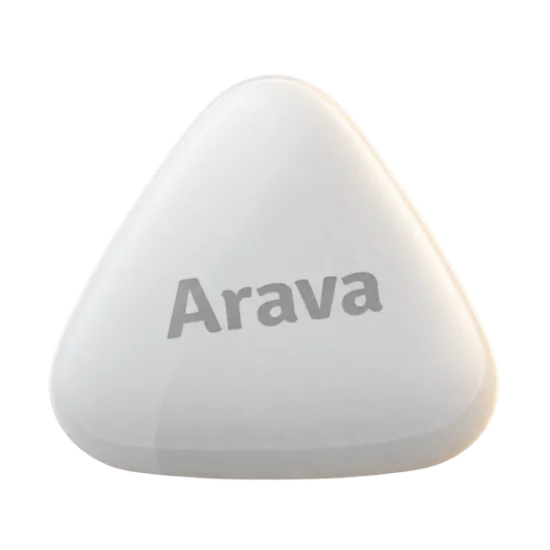
My morning stiffness gradually became easier, and I could use my hands for longer before needing a break. The first weeks included loose stools, so I reported it instead of stopping on my own.
Arava is used for inflammatory arthritis, including rheumatoid arthritis and psoriatic arthritis. Its active ingredient, leflunomide, reduces selected immune activity involved in joint inflammation and may help limit disease progression when prescribed for the right patient.
Overview
Arava contains leflunomide and belongs to the Disease Modifying Anti-Rheumatic Drug family, commonly shortened to DMARD. Leflunomide is also classified as a pyrimidine synthesis inhibitor. Arava is used for inflammatory arthritis, including rheumatoid arthritis and psoriatic arthritis.
Formulation
Arava contains leflunomide and belongs to the Disease Modifying Anti-Rheumatic Drug family, commonly shortened to DMARD. DMARDs act on inflammatory disease processes rather than only reducing pain. Leflunomide is also classified as a pyrimidine synthesis inhibitor.
Leflunomide as the Active Ingredient
Leflunomide is the active pharmaceutical ingredient in Arava. The body converts it into an active metabolite that remains responsible for much of the medicine’s pharmacological activity. Prescriptions and medical records may use either the brand name Arava or the generic name leflunomide.
DMARD and Pyrimidine Synthesis Inhibitor Classification
Pyrimidine synthesis is a cellular process needed to produce building blocks for DNA and RNA. Activated immune cells need this pathway when they multiply during an inflammatory response. Leflunomide interferes with that process, reducing the expansion of selected immune cells involved in arthritis.
Therapeutic indications
Arava is prescribed as a disease-modifying treatment for active inflammatory arthritis. It is not intended to provide instant pain relief like a simple analgesic. By reducing immune-driven inflammation, leflunomide aims to control disease activity, preserve joint function and reduce the risk of ongoing structural damage [1].
Arava is mainly associated with rheumatoid arthritis and psoriatic arthritis.
Rheumatoid Arthritis Treatment
Rheumatoid Arthritis causes immune-mediated inflammation in the lining of the joints. Common effects include prolonged morning stiffness, swollen joints, reduced grip strength and fatigue. Without adequate disease control, inflammation can damage cartilage, bone and surrounding tissues.
Arava aims to reduce rheumatoid arthritis activity over time. It does not work as an immediate rescue treatment for a painful flare, and symptom improvement can take several weeks. Prescribers assess progress through symptoms, joint examination, inflammatory markers and functional ability. Treatment goals should be agreed before judging whether the medicine is helping. Results are interpreted alongside safety findings and the person's daily function.
Psoriatic Arthritis Treatment
Psoriatic Arthritis can affect peripheral joints, tendon attachments, fingers, toes and the spine. Arava may be used for selected joint symptoms, while skin, nail and spinal features may require separate treatment planning. A response in one part of the disease does not guarantee equal improvement in every affected area.
The treatment plan may change when disease activity remains high or when adverse effects appear. Rheumatology teams balance joint control against liver results, blood counts, blood pressure and infection risk.

Dosage and administration
Arava is taken as a prescribed daily tablet. The regimen for the chosen strength should be confirmed with a healthcare professional before starting. Do not alter the amount, frequency or treatment duration independently.
- Take the tablet at the prescribed time each day.
- Swallow it with water unless the prescribing team gives different instructions.
- If a dose is missed, take it when remembered unless the next scheduled dose is close.
- Do not double the next dose to compensate.
- Attend scheduled blood tests and clinical reviews.
- Tell the prescribing team about new medicines before starting them.
- Continue monitoring even when joint symptoms improve.
The long persistence of leflunomide’s active metabolite has practical consequences. In selected situations, such as serious toxicity, pregnancy exposure or urgent treatment change, a clinician may use a prescribed elimination procedure. This is not a self-managed process.
Routine Blood-Test Monitoring
Before treatment, clinicians commonly review liver enzymes, full blood count, blood pressure, infection history and pregnancy status where relevant. Follow-up testing checks for liver injury, reduced blood-cell counts and other changes that may occur during treatment. The exact schedule is set by the prescriber and local product information.
Medsafe-approved information supports regular review of blood pressure, liver function and blood counts during leflunomide treatment [3].
Reasons not to use it
It may harm an unborn baby, so it is not suitable during pregnancy unless a specialist has made a specific clinical decision.
Arava may not be for you if you are pregnant, have serious liver disease, or cannot complete the required monitoring.
Tell the prescribing team about a current serious infection, recurrent infections, immune deficiency, tuberculosis risk or unexplained fever. Treatment may need review when infection symptoms are significant.
Other medicines that may require review include treatments affecting the liver, blood counts, immune activity or blood pressure.
When this is not for you
Arava may not be for you if you are pregnant, have serious liver disease, or cannot complete the required monitoring.
Anyone who becomes pregnant while taking Arava, or who plans to conceive, should contact the prescribing team urgently. Do not attempt a washout procedure independently.
Breastfeeding also requires a specific medical assessment.
Possible side effects
Leflunomide can cause gastrointestinal symptoms, headache, hair thinning, skin reactions and raised blood pressure. Liver injury is a more serious concern because abnormal liver tests may appear before a person feels unwell. Alcohol intake, pre-existing liver disease and other medicines that affect the liver can change the risk assessment.
Common Adverse Effects
Possible effects include:
- diarrhoea or loose stools;
- nausea or reduced appetite;
- headache or dizziness;
- hair thinning or increased hair shedding;
- rash or dry skin;
- raised blood pressure;
- mouth ulcers or changes in blood counts.
Diarrhoea can become disruptive and may lead a patient to stop treatment without advice. Hair shedding can also be upsetting, even when it is mild. Report persistent or severe symptoms so the prescribing team can decide whether testing, supportive treatment or a change in therapy is needed.
A practical point from medication use is that hair changes may be noticed during brushing before they seem obvious in photographs. Recording when the change began can help the clinician judge whether it relates to treatment or another cause.
Liver Injury Warning Signs
Seek urgent medical advice for:
- yellowing of the skin or whites of the eyes;
- unusually dark urine;
- pale stools;
- persistent vomiting;
- severe or unusual fatigue;
- marked pain under the right ribs;
- unexplained bruising or bleeding.
Do not wait for the next routine blood test if these symptoms occur. A person can have developing laboratory toxicity without obvious symptoms, which is why liver-function monitoring remains necessary.
How it affects the body
After administration, leflunomide is converted into its active metabolite, teriflunomide. This metabolite inhibits dihydroorotate dehydrogenase, an enzyme involved in producing pyrimidines. Reduced pyrimidine availability limits the multiplication of activated lymphocytes, which can lower inflammatory signalling in the joints [2].
Immune-System Modulation
Arava modifies selected immune activity rather than removing immunity completely. This explains both its therapeutic purpose and its safety concerns. Lower inflammatory activity may reduce swelling and stiffness, while altered immune responses can increase susceptibility to infections or contribute to changes in blood-cell counts.
Pyrimidine Synthesis Inhibition
The enzyme target gives leflunomide its disease-modifying action.
Common mistakes
Several practical mistakes can reduce safety or make treatment appear less useful:
- missing blood tests because joint symptoms have improved;
- doubling a dose after forgetting a tablet;
- stopping treatment without discussing the long persistence of the active metabolite;
- starting a new medicine without an interaction review;
- ignoring fever, jaundice, dark urine or severe abdominal pain;
- expecting immediate pain relief and judging treatment too early;
- assuming hair thinning or diarrhoea must simply be tolerated;
- failing to discuss pregnancy planning before treatment begins.
If a monitoring appointment is missed, arrange the test and contact the prescribing team rather than guessing whether treatment should continue. If a new medicine is needed, mention Arava before taking it.
Comparison
Arava is one option among conventional synthetic DMARDs and biologic DMARDs. The preferred approach depends on disease pattern, comorbidities, prior treatment, reproductive plans and the person’s tolerance of monitoring.
| Option | Main clinical features | Important trade-off |
|---|---|---|
| Arava (leflunomide) | Daily oral DMARD; inhibits pyrimidine synthesis | Liver, blood-pressure and blood-count monitoring; prolonged metabolite persistence |
| Methotrexate, sulfasalazine or hydroxychloroquine | Conventional DMARDs with different immune or inflammatory targets | Each has its own monitoring, interaction and reproductive considerations |
| Biologic DMARDs | Targeted immune treatments, often given by injection or infusion | Infection screening, administration planning and ongoing specialist review |
Methotrexate is commonly considered in inflammatory arthritis, though it has its own liver, blood-count and reproductive restrictions. Sulfasalazine may be useful in selected inflammatory joint or bowel-associated disease patterns. Hydroxychloroquine has a different pharmacological role and requires eye-related monitoring.
Biologic DMARDs act on specific immune mediators or cells. They can be considered when conventional DMARDs do not provide adequate control, but they involve infection screening and different administration arrangements. Arava has the convenience of oral dosing, balanced against liver monitoring and its long metabolite persistence.
What doctors say
In clinical practice, Arava can be a useful disease-modifying option for selected adults with active rheumatoid arthritis or psoriatic arthritis. Its value comes from reducing inflammatory disease activity, not from producing immediate analgesia. The trade-off is a monitoring burden involving the liver, blood counts and blood pressure.
Clinical decisions are based on measurable disease activity, laboratory results, infection history, comorbidities and reproductive plans. Guidance from Medsafe, the EMA, the FDA, NICE and WHO can support product-specific review. A patient may feel well while an abnormal liver result is developing. Scheduled tests therefore remain necessary even after symptoms improve.
The EMA product information describes leflunomide’s prolonged elimination and the need for specific precautions around pregnancy and toxicity [4]. In practice, those details affect prescribing decisions long after the first tablet has been taken.
Common questions
Which diet, exercise or habits can help or hinder Arava treatment?
Regular gentle exercise, joint-protection techniques, smoking cessation and a balanced diet can support mobility and general health during inflammatory arthritis care. No special diet has been proven to make leflunomide work reliably, and excessive alcohol can complicate liver-risk assessment. Medsafe guidance current to 2025 supports attention to liver monitoring and relevant risk factors during treatment. Keep activity within tolerable limits and report a worsening flare to the prescribing team.
Is Arava suitable for older adults?
Older adults may use Arava, but age-related liver, kidney, blood-pressure and infection considerations can affect treatment decisions. Other medicines are also more common with age, increasing the need for a careful interaction review. EMA product information available through 2025 supports individual assessment rather than automatic exclusion based on age. New or severe weakness, infection symptoms, bruising or confusion deserves prompt medical attention.
Can Arava tablets be split, crushed or chewed?
Arava tablets should be swallowed as prescribed rather than crushed or chewed unless the prescribing team gives a specific instruction. Altering a tablet can make administration difficult and may affect accurate dosing. Medsafe product information current to 2025 provides the relevant administration directions for leflunomide tablets. Ask the prescribing team about an alternative formulation if swallowing is difficult.
What is the best time of day to take Arava?
The best time is the time that matches the prescribed daily schedule and can be followed consistently. Taking it at the same time helps reduce missed doses; follow any food-related instructions supplied by the prescribing team. The EMA leflunomide information available in 2025 supports regular daily administration rather than changing times according to symptom fluctuations. Do not take an extra tablet when the previous dose was forgotten.
What should happen if the expected result does not come?
Contact the prescribing team if joint swelling, stiffness or functional problems remain active after the planned review period. The clinician may reassess the diagnosis, adherence, disease activity, laboratory results and suitability of the current DMARD. NICE guidance and New Zealand rheumatology practice in 2025 assess treatment response through clinical disease activity rather than pain alone. Do not increase the dose or combine DMARDs without a planned medical review.
Which symptoms mean stopping and seeing a doctor urgently?
Yellow skin, dark urine, severe fatigue, persistent vomiting, marked upper-abdominal pain, serious infection symptoms, severe rash, breathing difficulty or unexplained bleeding require urgent medical advice. Pregnancy during treatment or unexpected pregnancy exposure also requires urgent contact with the prescribing team because leflunomide can persist in the body. WHO medicine-safety principles current to 2025 support prompt assessment of severe or unexpected reactions rather than waiting for a routine appointment. Do not attempt a leflunomide elimination procedure without clinical supervision.
Do you offer anonymous delivery?
Your order will be securely packed and shipped within 24 hours. This is exactly what your package will look like (images of an actual item sent). It has the size and look of a regular private letter (24x11x0.7 cm) and its contents cannot be seen.
Which diet, exercise or habits can help or hinder Arava treatment?
Regular gentle exercise, joint-protection techniques, smoking cessation and a balanced diet can support mobility and general health during inflammatory arthritis care. No special diet has been proven to make leflunomide work reliably, and excessive alcohol can complicate liver-risk assessment. Medsafe guidance current to 2025 supports attention to liver monitoring and relevant risk factors during treatment. Keep activity within tolerable limits and report a worsening flare to the prescribing team.
Sources
- Medsafe (2024). Arava Data Sheet — leflunomide
- U.S. Food and Drug Administration (2024). Arava (leflunomide) Prescribing Information
- Medsafe (2024). Arava Consumer Medicine Information
- European Medicines Agency (2023). Arava: EPAR — Product information
Reviews: Arava
The tablets fitted my routine better than an injection. My blood tests added another appointment, and one result meant the clinic reviewed my medicines before I carried on.
I expected a fast change because the joint pain was frustrating. Improvement was slow, and the medication did not control every symptom, so my rheumatology plan was adjusted.
The joint swelling reduced after some time, but I noticed more hair in the shower. It was upsetting, although the clinician discussed the symptom and checked whether another cause was involved.
Arava helped my hands, but diarrhoea became difficult during workdays. The medicine was reviewed rather than simply ignored, and I learned to report changes early.