Levin, took the tablets for several weeks after confirming the escalation schedule with her prescriber. She noticed fewer evening cravings, but nausea was strongest after the first increase and improved when meals became smaller. Sleep was unsettled for several nights.
It is prescribed for adults with obesity or overweight-related health risks, alongside a reduced-calorie diet and increased physical activity. The tablets support long-term weight management rather than cosmetic weight loss alone.
Overview
Contrave combines naltrexone and bupropion to influence appetite and food-reward pathways in the brain. The tablets support long-term weight management rather than cosmetic weight loss alone.
Formulation
Contrave contains two active substances: naltrexone hydrochloride and bupropion hydrochloride. Naltrexone belongs to the opioid-antagonist class. Bupropion is a noradrenaline–dopamine reuptake inhibitor, often abbreviated as NDRI, and is also used in other therapeutic settings.
The combination is formulated as a modified-release tablet. Modified release means the tablet is designed to release its contents gradually rather than all at once.
Therapeutic indications
Contrave is an oral prescription treatment for chronic weight management in adults with obesity or excess weight linked to health risks. It is used with nutrition changes and increased physical activity, not as a replacement for them.
A prescriber may consider Contrave when obesity or overweight is accompanied by weight-related risks such as high blood pressure, abnormal blood glucose or sleep-related breathing problems.
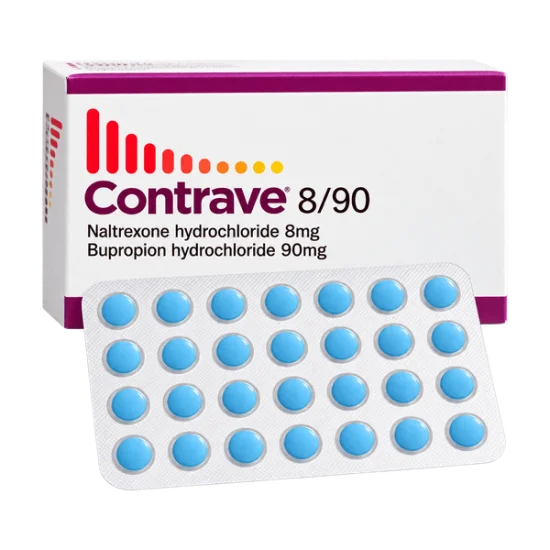
The product contains naltrexone hydrochloride and bupropion hydrochloride in modified-release tablets, with each tablet providing 8 mg of naltrexone hydrochloride and 90 mg of bupropion hydrochloride [1].
Dosage and administration
- Take Contrave orally as modified-release tablets.
- Each tablet contains 8 mg of naltrexone hydrochloride and 90 mg of bupropion hydrochloride.
- Follow the gradual dose-increase schedule and the prescribed number of tablets per day confirmed by a healthcare professional before starting; the exact regimen for the chosen strength is not specified here.
- Take the tablets at the prescribed times of day; exact meal timing is not specified here.
- Use Contrave for long-term weight management alongside a reduced-calorie diet and increased physical activity; treatment duration is determined by the prescriber.
Reasons not to use it
Contrave is not for you if you:
- Use opioid pain medicines, opioid cough medicines, opioid dependence treatment or illicit opioids.
- Are undergoing acute opioid withdrawal.
- Have uncontrolled hypertension.
- Have a seizure disorder or a condition that substantially increases seizure risk.
- Have current or previous bulimia or anorexia nervosa.
- Take another bupropion-containing medicine.
- Have used a monoamine oxidase inhibitor recently.
- Have severe liver impairment.
- Have an allergy to naltrexone, bupropion or an excipient in the tablets.
When this is not for you
Contrave is not intended for everyone with a weight concern. A clinician weighs expected benefit against contraindications, interactions and the patient’s ability to follow the dose-escalation schedule.
Naltrexone can precipitate sudden opioid withdrawal. It can also reduce the effect of opioid analgesics during surgery or emergency treatment. Tell emergency clinicians, surgeons and anaesthetists that you take Contrave before pain treatment is planned.
Possible side effects
The most frequent adverse effects occur during dose escalation. Nausea, constipation, headache, vomiting, dizziness, trouble sleeping, dry mouth and diarrhoea are recognised reactions. Clinical trial data and product information describe nausea as one of the most common early problems [3].
Gastrointestinal effects
Nausea may be more noticeable after each dose increase. Smaller meals, slower eating and avoiding rich or high-fat meals can reduce discomfort for some people. Persistent vomiting, severe abdominal pain or signs of dehydration require medical assessment.
Constipation may improve with fluid intake, dietary fibre and regular movement when these measures are suitable for the person’s health. Diarrhoea can also cause dehydration, especially when combined with vomiting or reduced food intake. People with kidney, heart or fluid-balance conditions should not make large fluid changes without medical guidance.
Neurological and sleep-related effects
Headache, dizziness and insomnia can occur during the first weeks. Taking the evening dose too close to bedtime may worsen trouble sleeping, although the prescribed timing should not be changed without clinical advice. Dizziness can impair balance and driving.
Dry mouth may be most irritating at night. Regular water intake, sugar-free gum and careful dental hygiene may help, but persistent dryness can increase dental decay risk and should be discussed during follow-up.
How it affects the body
Naltrexone hydrochloride action
Naltrexone blocks opioid receptors. Within Contrave, this action is used as part of a proposed appetite and reward-control pathway rather than to produce opioid effects. Opioid use creates a major safety issue because naltrexone can block opioid pain relief and may precipitate withdrawal in a person who still has opioids in their system.
Bupropion hydrochloride action
Bupropion influences noradrenaline and dopamine reuptake. These neurotransmitters participate in motivation, reward and appetite regulation. Bupropion also lowers the seizure threshold in some people, which is why seizure history, eating disorders, heavy alcohol use and sedative withdrawal must be reviewed before treatment.
Bupropion’s presence does not make Contrave a treatment for depression. The dose, formulation and therapeutic purpose differ from bupropion products prescribed for other conditions.
Combined appetite-control pathway
The proposed mechanism involves activity in hypothalamic appetite pathways and mesolimbic reward circuits. Bupropion may stimulate pro-opiomelanocortin neurons, while naltrexone may reduce feedback that limits this signalling. The clinical effect is not guaranteed and varies between patients.
Common mistakes
Several mistakes repeatedly reduce tolerability or create avoidable risk:
- Taking the full maintenance dose from the first day.
- Crushing or chewing modified-release tablets.
- Taking a missed dose together with the next scheduled dose.
- Failing to disclose opioid medicines before starting.
- Increasing the dose without a prescriber’s instruction.
- Ignoring new suicidal thoughts, mania, severe rash or visual symptoms.
- Forgetting that diarrhoea and vomiting can cause dehydration.
- Not telling emergency staff or an anaesthetist about naltrexone.
- Treating Contrave as a substitute for dietary and activity changes.
A food diary can reveal whether cravings, portion size or emotional eating are changing. A blood-pressure reading at follow-up is more useful than relying on how the medicine feels.
Comparison
Weight-management medicines differ in active ingredients, routes and contraindications. A GLP-1 medicine such as liraglutide acts on glucagon-like peptide-1 receptors and is administered by injection. Orlistat, used in Xenical, inhibits intestinal lipases so that less dietary fat is absorbed. Qsymia combines phentermine with topiramate and has central appetite-suppressing effects.
| Medicine or category | Main approach | Practical limitations |
|---|---|---|
| Contrave | Naltrexone plus bupropion; appetite and reward pathways | Opioid restrictions, seizure risk, nausea, blood-pressure monitoring |
| GLP-1 treatment such as Saxenda | GLP-1 receptor stimulation; appetite and gastric-emptying effects | Injection, gastrointestinal effects, condition-specific cautions |
| Orlistat such as Xenical | Reduces intestinal fat absorption | Oily stools, urgency and reduced absorption of some nutrients |
| Phentermine/topiramate such as Qsymia | Central appetite suppression | Psychiatric, cardiovascular, pregnancy and cognitive cautions |
Saxenda is administered by injection, while Contrave is taken as tablets. Xenical acts within the digestive tract and commonly causes bowel effects linked to dietary fat. Qsymia has a different central mechanism and requires specific pregnancy precautions because of topiramate exposure.
Belviq and Belviq XR contained lorcaserin, a serotonin-receptor agonist. The United States Food and Drug Administration requested their withdrawal from the US market in 2020 after a safety review identified a possible cancer risk; they should not be presented as current treatment options without a verified local regulatory basis [2]. Prescribing status can vary by jurisdiction, so local Medsafe information is relevant when clinicians assess available therapies.
No single option suits every patient. The choice depends on opioid use, seizure risk, blood pressure, diabetes, gastrointestinal tolerance, injection preferences, pregnancy potential, psychiatric history and treatment goals.
What doctors say
In clinical practice, prescribers usually focus first on contraindications rather than appetite suppression. Opioid exposure, uncontrolled blood pressure, seizure risk and concurrent bupropion are decisive safety questions.
A practical medical view is that Contrave works best when the patient follows the escalation schedule and attends review appointments. Early nausea or insomnia can make patients abandon treatment before the maintenance dose is assessed, while self-escalation increases risk without guaranteeing better results.
Doctors also distinguish a genuine treatment response from short-term appetite fluctuation. A useful response may involve fewer cravings, smaller portions and better control around trigger foods, even when the scale changes slowly. If the expected benefit does not develop, the correct step is reassessment of diagnosis, adherence, lifestyle factors and alternative treatment options.
Common questions
What condition rules out Contrave completely?
Current opioid use is a major reason Contrave may be unsuitable because naltrexone blocks opioid receptors and can trigger withdrawal. Medsafe product information reviewed in 2025 also identifies seizure disorders, uncontrolled hypertension, bulimia or anorexia nervosa, another bupropion product and recent monoamine oxidase inhibitor use as important contraindication areas. A complete medication history is required before treatment begins.
What should happen if the expected weight-management result does not come?
Do not increase the dose independently when appetite or weight does not change as expected. Clinical review should examine adherence, eating patterns, activity, sleep, other medicines and medical conditions. EMA assessment documents describe continued treatment as dependent on meaningful benefit and acceptable tolerability rather than an automatic long-term continuation.
What happens after stopping Contrave, and is tapering needed?
The prescriber should decide how Contrave is stopped. Some people notice increased appetite or the return of previous cravings after treatment ends because the medicine is no longer influencing the appetite and reward pathways. FDA prescribing information from 2024 does not support self-directed changes; the clinician should also consider mood, blood pressure, opioid needs and the reason for discontinuation.
What should be checked before starting Contrave?
The review should cover opioid use, bupropion-containing products, seizure risk, eating disorders, blood pressure, cardiovascular history, liver disease, psychiatric history and possible pregnancy. Medsafe guidance in 2025 also supports checking all prescription medicines, over-the-counter products and supplements for interactions. Planned surgery or possible future opioid pain treatment should be discussed before the first dose.
Which diet, exercise and habits support or hinder the result?
Contrave is used alongside a reduced-calorie eating pattern and increased physical activity. Regular meals, adequate sleep, movement and planning for trigger foods can support appetite control, while frequent high-fat meals may increase adverse effects and affect absorption. WHO guidance published in 2024 describes obesity management as requiring sustained behavioural and clinical support rather than reliance on one intervention.
Which symptoms mean stopping and seeking urgent medical help?
Seizures, suicidal thoughts, severe agitation, facial swelling, breathing difficulty, severe rash, chest pain, jaundice and sudden visual changes require urgent medical attention. Severe vomiting or diarrhoea with dehydration also needs prompt assessment. FDA safety information from 2024 highlights the need to act quickly when serious psychiatric, allergic, cardiovascular, hepatic or eye symptoms develop.
Can Contrave affect driving, concentration or work with machinery?
Dizziness, headache, blurred vision, sleep disturbance or reduced concentration can make driving and machinery work unsafe. Avoid those activities until you know how Contrave affects you, especially after a dose increase. Medsafe information reviewed in 2025 supports individual caution because impairment is not predictable for every patient.
Do you offer anonymous delivery?
Your order will be securely packed and shipped within 24 hours. This is exactly what your package will look like (images of an actual item sent). It has the size and look of a regular private letter (24x11x0.7 cm) and its contents cannot be seen.
Sources
- European Medicines Agency (2016). Mysimba: European public assessment report and product information.
- U.S. Food and Drug Administration (2020). FDA requests withdrawal of the weight-loss drug Belviq, Belviq XR from the market.
- U.S. Food and Drug Administration (2024). CONTRAVE prescribing information.
Reviews: Contrave
New Plymouth, reported that appetite control improved gradually rather than immediately. He had dry mouth and constipation during the first month, which made him more attentive to fluids and fibre. He stopped changing the dose himself after discussing the symptoms at review.
Wellington, found that Contrave reduced grazing during work hours but did not remove cravings completely. Headaches and dizziness made driving uncomfortable during the first week, so she avoided driving until the symptoms settled and the prescriber had reviewed them.
Masterton, experienced limited weight change despite taking the maintenance regimen. His follow-up focused on blood pressure, other medicines and meal patterns rather than simply adding tablets. The treatment plan was reassessed because the expected benefit had not appeared.
Auckland, had previously used a bupropion-containing medicine and initially assumed it could be continued with Contrave. Her prescriber identified the duplication before treatment began and changed the plan. The medication review prevented unnecessary additional bupropion exposure.