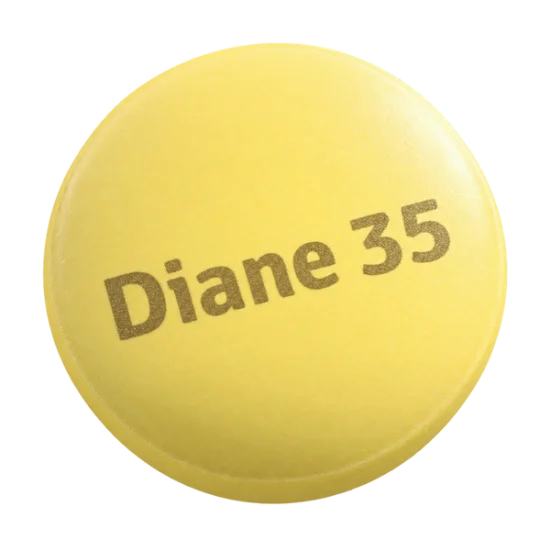
I used Diane 35 for several months after persistent jawline acne became difficult to manage. The oiliness improved first, while the larger spots took longer. I still needed a separate skincare routine for marks left by older breakouts.
Diane 35 is prescribed for women with androgen-related symptoms such as hormonal acne, unwanted terminal facial or body hair, and selected polycystic ovary syndrome (PCOS) manifestations. It combines hormonal and anti-androgen activity to reduce androgen-driven skin and hair changes, while requiring an individual assessment of clotting, migraine, cardiovascular and pregnancy-related risks.
Overview
Diane 35 is a prescription hormonal treatment supplied as tablets. It combines hormonal and anti-androgen activity to reduce androgen-driven skin and hair changes. Clinicians may consider it when androgen activity contributes to persistent acne, hirsutism or selected PCOS symptoms.
Formulation
Diane 35 is supplied as prescription hormonal tablets. It combines hormonal and anti-androgen activity to help reduce androgen-driven changes affecting the skin and hair. The exact strength and formulation should be confirmed by the prescriber.
Therapeutic indications
Diane 35 may help when acne, unwanted hair growth or irregular bleeding is linked to androgen activity. Treatment goals should be specific: fewer new inflammatory lesions, slower new coarse-hair growth or more predictable bleeding.
Hormonal acne treatment goals
Hormonal acne often affects the lower face, jawline, neck or chest and may worsen before menstruation. Diane 35 may reduce androgen-driven oil production, but improvement usually requires consistent treatment over several cycles.
Temporary fluctuation does not automatically mean treatment failure. Acne that becomes severe, painful, scarring or rapidly worse warrants earlier review rather than repeated self-treatment.
Existing scars and deep cysts may need additional dermatological management. Hormonal treatment alone does not reverse established scarring.
PCOS symptom management
PCOS can involve irregular periods, acne, hirsutism, weight-related metabolic risk and difficulty with ovulation. Not every person with PCOS needs Diane 35, and symptom treatment should reflect reproductive goals, clot risk and cardiovascular history.
The treatment may improve selected skin, hair and bleeding symptoms without correcting every feature of PCOS. Fertility planning, blood glucose, lipid levels and blood pressure may require separate attention.
The World Health Organization’s Medical Eligibility Criteria helps clinicians assess hormonal contraception against individual health factors [2]. Treatment decisions should change when the clinical picture changes.
Hirsutism and androgenisation symptoms
Hirsutism refers to coarse, pigmented hair growth in a male-pattern distribution. Diane 35 may slow the rate of new growth, while existing hairs can remain visible until removed by shaving, waxing, electrolysis or laser treatment.
Visible improvement is gradual. Hair-growth cycles mean that several months may pass before the difference is easy to judge.
Rapid-onset hirsutism, voice deepening, severe scalp hair loss or significant muscle changes require prompt medical assessment. These symptoms can signal marked androgen excess rather than routine cosmetic variation.

Dosage and administration
Diane 35 is a Prescription-Only Medicine. The appropriate regimen depends on the prescribed strength, the reason for treatment, previous hormonal treatment and individual risk factors. There is no single amount that suits every user.
Use the prescribed tablet schedule exactly. Take each tablet at the same time each day, using a phone reminder or another routine that is unlikely to be interrupted.
Before treatment, a prescriber should review:
- Current or possible pregnancy.
- Blood pressure and cardiovascular risk.
- Migraine, especially migraine with aura.
- Previous deep-vein thrombosis, pulmonary embolism or stroke.
- Smoking status.
- Recent surgery, prolonged immobility or long-distance travel.
- Liver disease and other relevant medical conditions.
- Prescription medicines, over-the-counter products and supplements.
Diane 35 may provide contraceptive protection when used correctly, but the indication and regimen should be explained by the prescriber. It should not be started solely for contraception without confirming that the treatment remains clinically appropriate.
Missed tablets and treatment continuity
Missed-tablet instructions can differ according to the number of tablets missed and where the person is in the treatment cycle. Use the approved consumer medicine information supplied for the prescribed product or obtain individual instructions from the prescriber rather than doubling tablets automatically.
Vomiting or severe diarrhoea can reduce absorption. Treat this as a possible missed-dose situation and obtain prompt dosing advice, especially when pregnancy prevention is also relevant.
Restarting after a long break deserves a fresh review. Blood pressure, migraine symptoms, smoking status, new medicines and recent surgery may have changed during the interval.
Reasons not to use it
A prescriber may advise against it when a patient has:
- Current or previous venous or arterial thrombosis.
- A known clotting disorder or substantial thrombosis risk.
- Migraine with aura or new neurological migraine symptoms.
- Severe uncontrolled hypertension.
- Significant liver disease.
- Certain hormone-sensitive cancers.
- Pregnancy or a need to establish pregnancy promptly.
- Unexplained vaginal bleeding requiring investigation.
Tell the prescriber about every medicine and supplement. Some treatments for epilepsy, tuberculosis, HIV infection and hepatitis C can alter hormonal exposure. St John’s wort may also reduce the reliability of hormonal treatment. The New Zealand regulator Medsafe advises careful review of medicines that can affect combined hormonal products [3].
When this is not for you
Diane 35 is NOT for you if a prescriber has identified a contraindication or an unacceptable clotting, migraine, cardiovascular, liver or pregnancy-related risk.
Possible side effects
Possible effects include nausea, breast tenderness, headache, mood changes, spotting and other bleeding-pattern changes. The intensity and duration vary between patients. Distressing mood symptoms, reduced sexual wellbeing or persistent headaches deserve a clinical review rather than dismissal.
Cyproterone acetate and ethinylestradiol expose the patient to hormonal effects that may be unsuitable in the presence of certain medical conditions. The most serious concern with combined hormonal treatment is venous thromboembolism, meaning a blood clot in a deep vein or the lungs.
Blood-clot warning signs
Seek urgent medical help for:
- One-sided leg swelling, warmth or calf pain.
- Sudden chest pain or unexplained breathlessness.
- Coughing blood.
- Sudden weakness, numbness, speech difficulty or vision loss.
- Severe abdominal pain.
- A sudden, severe or unusual headache.
Do not wait for a routine appointment when these symptoms occur. The risk assessment becomes more important after surgery, prolonged immobility, a long journey, a new migraine pattern or a major change in smoking status.
How it affects the body
Diane 35 acts through two complementary hormonal pathways. One component reduces the effect of androgens at sensitive tissues, while the oestrogen component contributes to hormonal feedback and cycle control. This can reduce androgen signalling in the skin and hair follicles. Lower androgen stimulation can reduce sebum production. Less sebum may reduce the conditions that contribute to acne, although acne can still fluctuate during the first treatment cycles. Hair follicles respond more slowly, so a reduction in new growth usually becomes apparent later than an improvement in oiliness.
Hormonal regulation can also produce predictable withdrawal bleeding during a planned tablet-free interval. Withdrawal bleeding does not prove that PCOS has resolved. It reflects the effect of the treatment regimen on the uterine lining.
Androgen activity and skin symptoms
Androgens influence sebaceous glands and hair follicles. Diane 35 can reduce the hormonal stimulation behind oil production and coarse-hair growth, but it does not permanently remove hair or guarantee complete acne clearance.
Hormonal regulation and bleeding
The treatment can make bleeding more predictable for some patients. Spotting or changes in bleeding can still occur, especially early in treatment or after missed tablets.
One practical detail is easy to overlook: regular withdrawal bleeding does not confirm that ovulation, insulin resistance or other PCOS features have normalised. Metabolic and reproductive health may need separate review.
The European Medicines Agency reviewed cyproterone acetate and ethinylestradiol-containing medicines because their benefits must be balanced against venous thromboembolism risk [1].
Common mistakes
Common mistakes include:
- Starting treatment without confirming pregnancy status.
- Using Diane 35 only for contraception without reviewing the current indication.
- Doubling tablets after a missed dose without checking the correct instructions.
- Restarting after a long break without a fresh risk assessment.
- Ignoring calf pain, chest pain, sudden breathlessness or neurological symptoms.
- Expecting established hair or acne scars to disappear quickly.
- Sharing tablets with someone who has similar symptoms.
- Forgetting that vomiting or severe diarrhoea can affect absorption.
- Treating new migraine aura as an ordinary headache.
- Stopping abruptly without discussing the next contraceptive or symptom-management plan.
Comparison
Treatment selection depends on the symptom being treated, pregnancy plans, clot risk, migraine history, metabolic health and previous response. Diane 35 may address more than one androgen-related symptom, but its oestrogen component creates risks that do not apply to every alternative.
| Treatment approach | Main target and limitation |
|---|---|
| Diane 35 | Androgen-related acne, hirsutism and selected PCOS symptoms; includes oestrogen-related clot risk |
| Topical acne treatment | Local acne control with limited whole-body hormonal action; does not treat hirsutism or cycle irregularity |
| Non-oestrogen hormonal or anti-androgen treatment | May target a selected symptom; suitability, pregnancy precautions and monitoring vary |
| Hair-removal methods | Remove visible hair; do not change the hormonal cause or prevent new growth |
Topical acne treatment may be more suitable when acne is mild and isolated. Hair-removal methods can improve appearance while a hormonal treatment addresses the rate of new growth. A non-oestrogen approach may be considered when oestrogen-related risks make combined treatment unsuitable.
Treatment choice by symptom pattern
A patient with acne alone may not need a treatment designed for several androgen-related symptoms. A patient with hirsutism may require endocrine assessment before treatment begins, especially when symptoms developed quickly.
A history of thrombosis, migraine with aura, uncontrolled blood pressure or prolonged immobility can shift the balance away from oestrogen-containing treatment. The decision belongs to the prescribing assessment, not to symptom matching alone.
PCOS treatment priorities
PCOS care may include menstrual management, skin treatment, metabolic screening, fertility planning and lifestyle support. Diane 35 can be one part of symptom management, but it is not a complete PCOS plan.
What doctors say
In clinical practice, prescribers usually balance the expected improvement in androgen-related symptoms against oestrogen-associated risks. They review whether Diane 35 still has a clear indication, especially when the original acne or hair-growth problem has improved.
A prescriber will usually want accurate information about blood pressure, smoking, migraine, surgery, travel, family history and medicines. Patients sometimes remember the medication name but forget to mention a new medicine or a change in migraine pattern.
A blood-pressure check is easy to overlook when the main concern is acne or facial hair. It still forms part of a sensible hormonal safety review.
Common questions
Can older adults use Diane 35?
Age alone does not determine suitability, but older age can increase the importance of cardiovascular, blood-pressure and clotting assessment. Medsafe product information from 2024 supports individual review of combined hormonal treatment when risk factors change. A prescriber should also consider smoking, migraine, surgery, immobility and other medicines before treatment begins.
What should be discussed with a prescriber before starting Diane 35?
Discuss pregnancy possibility, blood pressure, migraine with aura, previous thrombosis, liver disease, smoking, recent surgery and every medicine or supplement. Medsafe’s safety information remains relevant in 2026 because these factors can alter the balance between benefit and risk. Mention any previous reaction to hormonal treatment and the exact reason Diane 35 is being considered.
Can the Diane 35 tablet be split, crushed or chewed?
Do not split, crush or chew the tablet unless the prescriber or pharmacist has specifically confirmed that this is suitable for the supplied product. The tablet should generally be swallowed as directed, because altering a solid dosage form can affect reliable administration. Medsafe consumer medicine information should be used for product-specific handling advice, with the 2024 product information providing the relevant instructions.
Is alcohol allowed while using Diane 35?
Alcohol does not provide a reliable reason to change the prescribed tablet schedule, but heavy drinking can worsen nausea, headaches, mood symptoms and missed-dose risk. WHO guidance published in 2022 supports limiting alcohol as part of general health planning. Avoid using alcohol to manage treatment-related symptoms, and report persistent vomiting or severe headaches.
How long does a course last, and is long-term use acceptable?
The course length depends on the indication, response and risk profile. Diane 35 should continue only while the prescriber considers that its benefits justify its risks; treatment should be reviewed rather than continued indefinitely by habit. EMA’s 2013 safety review emphasised restricting cyproterone acetate and ethinylestradiol treatment to appropriate clinical indications.
Can Diane 35 be combined with other medicines or supplements?
Some medicines for epilepsy, tuberculosis, HIV infection and hepatitis C can alter hormonal levels, and St John’s wort may reduce hormonal reliability. WHO guidance published in 2015 supports checking medicine interactions before relying on a hormonal regimen. Provide the prescriber with a complete list of medicines, herbal products and supplements before starting, restarting or changing treatment.
Do you offer anonymous delivery?
Your order will be securely packed and shipped within 24 hours. This is exactly what your package will look like (images of an actual item sent). It has the size and look of a regular private letter (24x11x0.7 cm) and its contents cannot be seen.
Sources
- European Medicines Agency (2013). Cyproterone acetate/ethinylestradiol-containing medicines — referral.
- World Health Organization (2015). Medical eligibility criteria for contraceptive use.
- Medsafe — New Zealand Medicines and Medical Devices Safety Authority (2024). Data Sheet and Consumer Medicine Information for cyproterone acetate/ethinylestradiol.
Reviews: Diane 35
My prescriber reviewed my age, blood pressure and medical history before discussing whether this treatment was appropriate. I had expected a quick answer because my symptoms were familiar, but the risk assessment changed the conversation. I did not start it without that review.
The first cycle included spotting and breast tenderness, which was frustrating. Those effects settled, but the improvement in facial hair was gradual rather than dramatic. I kept a monthly note because it was hard to judge day by day.
I missed tablets during a week of stomach upset and nearly doubled the next dose. The prescriber gave me specific instructions instead. That experience made me take vomiting and diarrhoea more seriously.
My acne improved after several cycles, but I had headaches that needed review. The treatment was not continued automatically; my prescriber checked whether the headache pattern had changed. I appreciated having a clear reason for stopping rather than guessing.