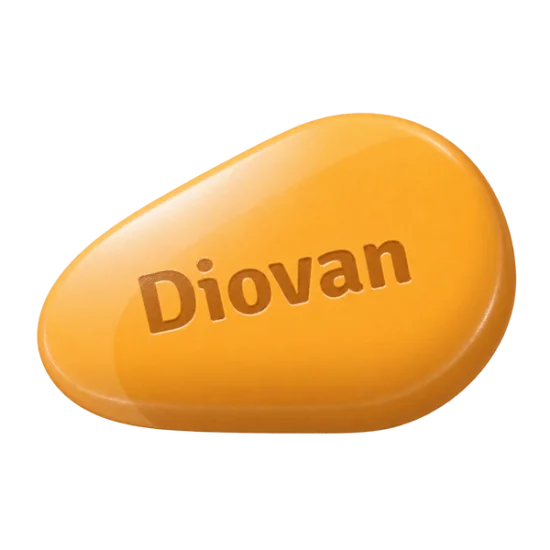
I started valsartan after several high readings at work. The first week brought mild dizziness when I stood up, but it settled after I slowed down getting out of the car. My readings became more consistent after a few weeks.
Patients aged 18 years or older with hypertension, heart failure, or a previous myocardial infarction may be prescribed Diovan. Diovan contains valsartan, an angiotensin II receptor blocker that relaxes blood vessels and reduces strain on the heart. It is taken as oral tablets, with the selected regimen confirmed by a healthcare professional before treatment begins.
Overview
Diovan contains valsartan, an angiotensin II receptor blocker (ARB). It is prescribed for high blood pressure, selected cases of heart failure, and cardiovascular protection after myocardial infarction.
Formulation
Diovan is supplied as tablets containing valsartan. The regimen for the chosen strength is confirmed with a healthcare professional before treatment begins.
Therapeutic indications
Diovan contains valsartan, an angiotensin II receptor blocker (ARB). It is prescribed for high blood pressure, selected cases of heart failure, and cardiovascular protection after myocardial infarction. By reducing blood-vessel constriction, valsartan lowers pressure inside the arterial system and decreases the workload placed on the heart. The FDA prescribing information describes these uses and the need for dose adjustment in selected patients [1].
Untreated hypertension can damage arteries gradually. Lowering blood pressure reduces stress on the heart and may reduce the long-term risk of stroke, heart failure, and kidney injury. The benefit depends on sustained blood-pressure control rather than a single lower reading.
Hypertension management in adults and children
Diovan is commonly used for essential hypertension in adults. Essential hypertension means persistently raised blood pressure without one single identifiable cause. Valsartan may also be prescribed in paediatric patients in situations covered by local prescribing information, with the dose determined by age, body size, kidney function, and clinical response.
Medsafe regulates medicines in New Zealand, while the European Medicines Agency evaluates medicines within the European Union. Licensing details and approved age groups can differ between jurisdictions, so the regimen for a child requires a clinician’s calculation rather than an adult dose divided into smaller portions.
Post-myocardial infarction and heart failure support
After a myocardial infarction, valsartan can reduce harmful pressure and remodelling forces affecting the heart. In heart failure, the medicine can reduce the resistance against which the heart pumps and may ease symptoms such as breathlessness or swelling when used within an appropriate treatment plan.
Clinical trials of valsartan in heart failure and after myocardial infarction evaluated hospitalisation and cardiovascular outcomes, not only symptom relief. The choice between an ARB and another heart-failure treatment depends on kidney function, potassium concentration, blood pressure, previous treatment, and the presence of cough or intolerance with an ACE inhibitor.
Dosage and administration
- Dose: Use the strength and regimen confirmed by a healthcare professional before starting treatment.
- Frequency: Follow the prescribed frequency for hypertension, heart failure, or cardiovascular protection after myocardial infarction.
- Timing: Take the tablet at the prescribed time, with or without food.
- Duration: Continue treatment for the period directed by a healthcare professional.
- Route: Take the tablet orally with water.
- If a dose is missed: Take it when remembered unless the next scheduled dose is close; do not take two doses together.
Reasons not to use it
- Previous serious allergic reaction to valsartan or an ingredient in the tablet.
- Pregnancy, especially after the first trimester; medicines acting on the renin-angiotensin system can harm the developing baby.
- Severe liver disease or biliary obstruction.
- Significant kidney disease, renal artery narrowing, dehydration, or recent fluid loss.
- Existing hyperkalaemia.
- Concurrent treatment with aliskiren in people with diabetes or significant kidney impairment.
Avoid potassium supplements, potassium-containing salt substitutes, and potassium-sparing diuretics unless the prescriber has specifically included them in the treatment plan. Non-steroidal anti-inflammatory drugs, including ibuprofen and naproxen, can reduce the blood-pressure effect and increase kidney risk in susceptible patients.
Dual blockade of the renin-angiotensin system with valsartan and aliskiren can increase the risk of low blood pressure, kidney impairment, and hyperkalaemia. Lithium levels can also rise with medicines affecting renal handling, so combined use requires explicit prescribing oversight.
When this is not for you
Diovan is NOT for you if you are pregnant, have had a serious allergic reaction to valsartan, or have been told to avoid renin-angiotensin system blockers.
Possible side effects
Valsartan is often tolerated without major problems, but adverse effects can occur. Dizziness, headache, fatigue, low blood pressure, and changes in kidney function are recognised possibilities. The Medsafe data sheet for valsartan-based treatment describes monitoring of renal function and potassium, especially after treatment changes [2].
Possible effects include:
- Dizziness or light-headedness, especially after standing.
- Headache during early treatment.
- Fatigue or reduced energy.
- Low blood pressure, with weakness or faintness.
- Raised potassium, called hyperkalaemia.
- Worsening kidney function in susceptible patients.
- Nausea or other mild digestive symptoms.
Hyperkalaemia may cause muscle weakness, palpitations, or abnormal heart rhythms, although it can also produce no obvious symptoms. Kidney blood tests and electrolyte measurements help identify this problem before it becomes severe.
Seek urgent medical attention for swelling of the face, lips, tongue, or throat; severe breathing difficulty; fainting; marked weakness; or a rapid or irregular heartbeat. These symptoms require prompt assessment because they may indicate angioedema, serious hypotension, or a significant electrolyte disturbance.
A practical detail is easy to miss: dizziness may reflect low blood pressure rather than an allergy. Another is that potassium abnormalities often cannot be judged by how a person feels, so blood testing matters even when treatment seems comfortable.
The most clinically relevant interactions involve kidney function, blood pressure, and potassium balance. Aliskiren, potassium-sparing diuretics, potassium supplements, and potassium-based salt substitutes may increase potassium when combined with valsartan.
Other medicines require review:
- ACE inhibitors can create excessive renin-angiotensin system blockade when combined with an ARB.
- Non-steroidal anti-inflammatory drugs can impair kidney function and weaken blood-pressure control.
- Diuretics can intensify the fall in blood pressure, especially after dehydration.
- Lithium may reach toxic concentrations.
- Other medicines that lower blood pressure can increase dizziness or fainting.
The WHO hypertension guideline emphasises treatment selection according to cardiovascular risk, kidney status, and coexisting disease [3]. An interaction check should include prescription medicines, over-the-counter painkillers, electrolyte products, and herbal preparations.

How it affects the body
Valsartan blocks the AT1 receptor, the main receptor through which angiotensin II causes blood-vessel constriction, sodium retention, and stimulation of aldosterone release. This action reduces activation of the renin-angiotensin system, allowing arteries to relax and reducing fluid-retaining signals.
Angiotensin II receptor antagonists act at the receptor level. ACE inhibitors reduce the formation of angiotensin II and can increase bradykinin, a peptide associated with cough and, rarely, angioedema. Valsartan does not inhibit the breakdown of bradykinin, so persistent dry cough is less characteristic with valsartan than with ACE inhibitors.
Common mistakes
Several routine errors can make Diovan appear less suitable than it is:
- Stopping treatment because blood pressure improves.
- Taking two tablets after forgetting one.
- Using potassium salt substitutes without mentioning them.
- Taking frequent ibuprofen or naproxen without reporting it.
- Ignoring repeated dizziness or faintness.
- Missing kidney-function and electrolyte blood tests.
- Assuming a tablet can be split, crushed, or chewed without confirming that the specific product allows it.
- Measuring blood pressure immediately after exercise, caffeine, or emotional stress and treating that single reading as the usual level.
Comparison
Diovan belongs to the ARB class. Other ARBs include losartan, irbesartan, candesartan, eprosartan, olmesartan, and telmisartan. ACE inhibitors include ramipril, lisinopril, and enalapril. These medicines share some effects on the renin-angiotensin system, but they differ in pharmacokinetics, licensed indications, dosing schedules, and tolerability.
| Treatment group | Main action | Typical clinical distinction |
|---|---|---|
| Valsartan and other ARBs | Block AT1 receptors | Lower cough risk than ACE inhibitors |
| ACE inhibitors | Reduce angiotensin II formation and affect bradykinin | Cough and angioedema are recognised concerns |
| Other antihypertensive classes | Act through calcium channels, fluid balance, or sympathetic pathways | Choice depends on age, comorbidities, and blood-pressure pattern |
NICE guidance supports the use of an ARB when an ACE inhibitor is unsuitable or poorly tolerated. A persistent dry cough is a common reason for changing from an ACE inhibitor to an ARB, although the medicines are not identical and the switch still requires an appropriate regimen.
Doctors may select valsartan rather than losartan or candesartan because of the patient’s previous response, heart-failure indication, blood-pressure pattern, kidney results, or other medicines. Brand-to-brand milligram comparisons are unreliable.
What doctors say
In clinical practice, doctors usually judge valsartan by a pattern of readings rather than by one unusually high or low result. They also look for dizziness, swelling, breathlessness, adherence difficulties, and changes in creatinine or potassium.
A clinician may increase the dose gradually when blood pressure remains above target and the medicine is tolerated. A lower dose or a different class may be chosen when there is symptomatic hypotension, kidney deterioration, raised potassium, or an interaction with another treatment.
Patients sometimes expect a tablet to correct years of hypertension within a few days. The more useful assessment is a series of home readings combined with laboratory monitoring and a review of cardiovascular risk factors. Valsartan reduces one part of the risk pathway; it does not remove the effects of smoking, excess dietary sodium, untreated sleep apnoea, or uncontrolled diabetes.
Comparison
Common questions
Which symptoms mean stopping Diovan and seeking urgent medical help?
Swelling of the lips, tongue, face, or throat, difficulty breathing, fainting, severe weakness, or a fast irregular heartbeat requires urgent medical assessment. These symptoms can indicate angioedema, severe hypotension, or a major electrolyte disturbance. FDA safety information reviewed in 2022 identifies angioedema and foetal toxicity as serious risks associated with renin-angiotensin system medicines. Do not take another dose until urgent medical advice has been obtained when a severe reaction is suspected.
Can Diovan cause a dry cough?
Valsartan can be associated with cough, but a persistent dry cough is less characteristic than with ACE inhibitors. The pharmacological reason is that valsartan blocks the AT1 receptor without inhibiting bradykinin breakdown. EMA product information reviewed in 2018 describes this difference between ARBs and ACE inhibitors. A new cough still deserves review because reflux, infection, asthma, and other medicines can also cause it.
How does Diovan differ from losartan or other ARBs?
Diovan contains valsartan, while losartan, irbesartan, candesartan, and telmisartan contain different active substances. All act mainly by blocking AT1 receptors, yet their licensed indications, dosing schedules, metabolism, and evidence in specific heart conditions differ. NICE guidance updated in 2023 treats ARBs as a class option while leaving the individual medicine choice to the clinical situation. Milligram strengths cannot be converted directly between ARBs.
Can people under 18 use Diovan?
Valsartan may be prescribed for selected children and adolescents when the indication and formulation are appropriate. The dose depends on age, body size, kidney function, blood pressure, and the local approved product information. Medsafe's 2024 paediatric prescribing principles require age-appropriate dosing and monitoring rather than using an adult tablet regimen automatically. A child should receive only the regimen confirmed for that child.
What happens if Diovan is stopped, and does it need tapering?
Stopping valsartan can allow blood pressure to rise again and may remove part of its protective effect in heart failure or after myocardial infarction. It does not usually require a taper in the same way as some medicines acting on the brain, but abrupt cessation should still be planned with the prescriber. The WHO 2021 hypertension guideline supports continuing long-term blood-pressure treatment when clinically indicated. The prescriber may replace it with another medicine or adjust the regimen before discontinuation.
Can a Diovan tablet be split, crushed, or chewed?
A tablet should be swallowed as directed unless the prescriber or dispensing pharmacist has confirmed that splitting is suitable for that specific tablet. Crushing or chewing can make swallowing easier for some people, but the tablet’s score line, coating, and formulation determine whether that is appropriate. FDA product information from 2022 describes oral tablet administration but does not make every tablet interchangeable for manipulation. Ask for an appropriate formulation before altering the tablet.
Do you offer anonymous delivery?
Your order will be securely packed and shipped within 24 hours. This is exactly what your package will look like (images of an actual item sent). It has the size and look of a regular private letter (24x11x0.7 cm) and its contents cannot be seen.
Sources
- U.S. Food and Drug Administration (2022). Diovan (valsartan) Prescribing Information.
- Medsafe, New Zealand Medicines and Medical Devices Safety Authority (2024). Valsartan medicine data sheet and consumer medicine information.
- World Health Organization (2021). Guideline for the Pharmacological Treatment of Hypertension in Adults.
Reviews: Diovan
I had previously used an ACE inhibitor and developed an irritating dry cough. After changing to Diovan, the cough gradually stopped. I still needed a blood test after the dose change, which was inconvenient, but my blood pressure log was much better.
The tablets fitted into my morning routine and I did not notice much at first. A later blood test showed potassium was higher, so the doctor reviewed my other medicines and changed the plan. The result reminded me that side effects are not always obvious.
I missed several doses during a busy week and assumed the medicine was not helping. My readings rose again. Taking it at the same time each day made the difference, although I needed a reminder on my phone.