The first day was uncomfortable and I had to take it easy. By the end of the week, movement was easier and I could sleep better, although the improvement did not last as long as I had hoped.
Depo-Medrol
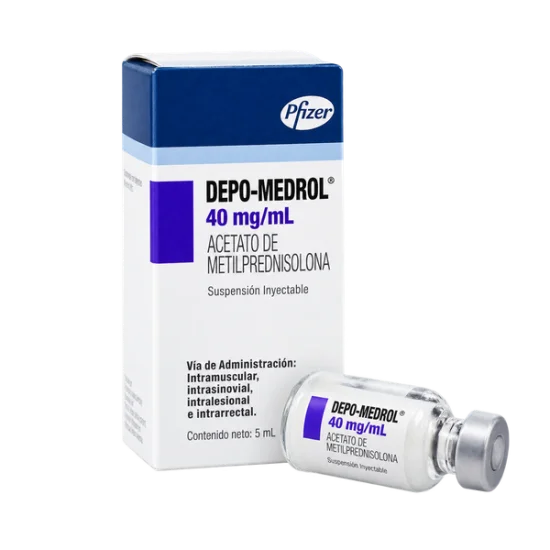
Depo-Medrol is an injectable corticosteroid suspension containing methylprednisolone acetate. It is used by qualified healthcare professionals for selected inflammatory, allergic, rheumatic, dermatological, and autoimmune conditions, with the regimen confirmed before treatment begins.
Overview
Depo-Medrol is an injectable corticosteroid suspension containing methylprednisolone acetate, a long-acting glucocorticoid. It is administered by a qualified healthcare professional for selected inflammatory, allergic, rheumatic, dermatological, and autoimmune conditions. The regimen for the selected strength is confirmed with a healthcare professional before starting.
Formulation
The active ingredient in Depo-Medrol is methylprednisolone acetate. The regimen for the selected strength must be confirmed with a qualified healthcare professional before treatment begins. It belongs to the glucocorticoid group of corticosteroids.
Methylprednisolone acetate is an ester derivative of methylprednisolone. In the injectable suspension, the active substance is released gradually from the injection site. This depot behaviour explains why Depo-Medrol is used for sustained local or systemic corticosteroid exposure rather than rapid, short-lived treatment.
The formulation is a sterile aqueous suspension intended for injection. It must be handled and administered using aseptic clinical practice. The New Zealand product information describes the pharmacology, administration routes, contraindications, and warnings for methylprednisolone acetate [1].
Therapeutic indications
Depo-Medrol may be prescribed when inflammation or immune activity is causing clinically significant symptoms. The route and dose are selected according to the diagnosis and the tissue involved.
Potential clinical uses include:
- Rheumatic and musculoskeletal inflammation affecting joints, bursae, or tendon sheaths.
- Selected inflammatory arthritis conditions.
- Localised inflammatory skin disorders treated by intralesional injection.
- Severe allergic or inflammatory conditions where corticosteroid treatment is appropriate.
- Some autoimmune or connective-tissue disorders.
- Other corticosteroid-responsive conditions assessed by a prescriber.
Depo-Medrol does not treat bacterial, viral, or fungal infections directly. Corticosteroid suppression may make infection harder to recognise and can allow some infections to worsen. A clinician must assess unexplained fever, an acutely swollen joint, a new skin infection, or a suspected systemic infection before injection.
The indication also affects the expected benefit. A local injection may help a defined inflamed structure, while a systemic effect can expose the rest of the body to corticosteroid activity and a wider range of adverse effects.
Dosage and administration
Depo-Medrol is administered by injection. The route must be selected by a qualified healthcare professional after assessment of the condition and the intended treatment area.
Clinical routes can include:
- Intra-articular injection: placement into a joint space for selected inflammatory joint disorders.
- Intrabursal injection: placement into a bursa when inflammation contributes to pain and restricted movement.
- Intralesional injection: small-volume treatment within selected skin lesions.
- Soft-tissue injection: treatment around selected tendon sheaths or other soft-tissue structures.
- Systemic injection: used only when clinically appropriate and in accordance with authorised product information.
Exact dose, injection volume, frequency, and treatment duration are not interchangeable between these routes. The regimen for the chosen strength must be confirmed with a healthcare professional before starting.
Aseptic technique matters. The injection site must be assessed for infection, the vial must be prepared correctly, and the needle must not be introduced into an infected area. Intra-articular injection also requires anatomical accuracy because incorrect placement can injure tissue or fail to deliver treatment to the intended space.
A missed appointment or postponed injection should be rescheduled through the treating service. Do not attempt to make up a missed treatment with an additional injection, because the appropriate interval depends on the condition and route.
Reasons not to use it
Treatment may be unsuitable or require a different plan in the following circumstances:
- Known serious allergy to methylprednisolone, other corticosteroids, or an excipient in the formulation.
- Infection at the proposed injection site.
- Untreated systemic infection where corticosteroid suppression could worsen the illness.
- Certain fungal infections.
- Injection into a joint affected by infection.
- Recent or planned live vaccination during significant immunosuppressive corticosteroid exposure.
- Conditions in which a corticosteroid-related rise in glucose, blood pressure, eye pressure, or fluid retention would create unacceptable risk.
A corticosteroid injection should not be placed directly into the Achilles tendon or other vulnerable tendon structures unless a specialist has established a suitable plan. Tendon weakening and rupture are recognised concerns with corticosteroid exposure around tendons.
When this is not for you
Depo-Medrol is not suitable for every patient or every injection site. This medication is not for you if a clinician has identified a contraindication to methylprednisolone acetate or corticosteroid injection.
Extra assessment is needed during pregnancy and breastfeeding, with diabetes, recurrent infections, osteoporosis, glaucoma, epilepsy, severe mood disorder, or previous adrenal suppression. The benefit of treatment must be weighed against maternal, fetal, infant, and maternal health considerations.
Possible side effects
The side-effect profile depends on whether the injection remains mainly local or produces meaningful systemic corticosteroid exposure. Repeated injections, high cumulative exposure, injection into highly vascular tissue, and individual susceptibility can increase risk.
| Timing or pattern | Possible effects |
|---|---|
| Short-term | Injection-site pain, flushing, temporary rise in blood glucose, mood change, insomnia, indigestion, headache |
| Repeated or systemic exposure | High blood pressure, weight change, fluid retention, menstrual changes, skin thinning, bruising, muscle weakness, cataracts, glaucoma, osteoporosis, adrenal suppression |
Local discomfort can occur for a day or two after injection. Some people experience a temporary flare of pain before anti-inflammatory benefit develops. Resting the treated area according to clinical advice may help, while strenuous loading immediately after an injection can worsen local irritation.
People with diabetes may notice higher glucose readings after corticosteroid exposure. The rise may occur even when the injection was given into a joint or soft tissue. Blood glucose monitoring plans may need temporary adjustment.
Mood and sleep changes deserve practical attention. Restlessness, irritability, anxiety, unusually elevated mood, or difficulty sleeping can occur after corticosteroid treatment. Severe confusion, hallucinations, or marked behavioural change requires urgent medical assessment.
Longer-term or repeated exposure can weaken bone and affect the adrenal glands. Adrenal suppression means the body may respond less effectively to physical stress after prolonged corticosteroid exposure. It can also make abrupt interruption of systemic corticosteroid treatment dangerous.
Seek urgent medical assessment for breathing difficulty, facial swelling, severe rash, sudden vision changes, severe weakness, black stools, vomiting blood, or signs of serious infection.
One practical detail is easy to miss: pain relief after a corticosteroid injection can encourage a person to overload the treated joint too soon. Reduced pain does not mean that damaged tissue has fully recovered.

How it affects the body
Methylprednisolone enters cells and binds to glucocorticoid receptors. This changes the activity of specific genes involved in inflammation. The result is reduced production of inflammatory mediators, lower movement of immune cells into affected tissue, and less swelling, redness, itching, and pain. The clinical response depends on the injection site, condition being treated, and individual factors.
Depo-Medrol may be used when inflammation is concentrated in a joint, tendon sheath, bursa, skin lesion, or another defined area. In selected circumstances, a clinician may use corticosteroid treatment for a broader inflammatory or allergic disorder.
Role of Glucocorticoids in Inflammation Control
Glucocorticoids act at several stages of the inflammatory response. They reduce signalling substances such as cytokines and limit the activity of immune cells that contribute to tissue irritation. This can relieve symptoms, although it does not remove the underlying cause of every condition.
The main benefit is prolonged anti-inflammatory activity from an acetate ester suspension. The limitation is that corticosteroid suppression can also reduce protective immune responses and affect glucose, blood pressure, bone, skin, and adrenal function when exposure is repeated or substantial.
Common mistakes
Several avoidable errors can reduce benefit or increase risk:
- Treating a scheduled injection as a self-administered dose.
- Failing to mention diabetes, anticoagulants, infection symptoms, or recent vaccines.
- Assuming a local injection cannot affect blood glucose, sleep, mood, or blood pressure.
- Returning immediately to heavy exercise because pain has improved.
- Receiving repeated injections without reviewing the underlying diagnosis.
- Taking extra naproxen, ibuprofen, or another anti-inflammatory without discussing stomach and bleeding risk.
- Forgetting to report previous corticosteroid reactions.
- Discarding treatment documentation when repeated or systemic corticosteroid exposure is involved.
Comparison
Depo-Medrol differs from oral methylprednisolone products and oral prednisolone because it uses a depot injection rather than a tablet taken repeatedly. The choice depends on the required route, the site of inflammation, the need for dose adjustment, and the duration of corticosteroid exposure.
| Corticosteroid approach | Route and treatment pattern | Main clinical distinction |
|---|---|---|
| Depo-Medrol | Injectable methylprednisolone acetate suspension | Depot exposure after injection; useful for selected local or systemic indications |
| Medrol or Medrone | Oral methylprednisolone tablets | Flexible daily dosing and easier dose adjustment or tapering |
| Prednisolone | Oral corticosteroid tablets or liquid | Systemic treatment with dose changes possible during a planned course |
Depo-Medrol may be considered when a clinician wants treatment directed into a joint, bursa, soft tissue, or lesion. Oral Medrol, Medrone, or Prednisolone may be preferred when systemic treatment needs daily adjustment, rapid discontinuation, or a structured taper.
A depot injection is not automatically stronger or more suitable than an oral corticosteroid. It can be harder to reverse once administered because the medicine remains available from the injection site. The EMA’s corticosteroid guidance highlights the need to match formulation and route to the clinical objective [2].
What doctors say
In clinical practice, doctors usually assess the diagnosis before deciding whether an injection is appropriate. Pain alone does not prove that inflammation is the cause, and an injection can mask symptoms from an infection or structural injury.
A physician will also consider whether the target is accessible, whether there is skin or joint infection, and whether the expected benefit justifies corticosteroid exposure. For people with diabetes, the aftercare plan may include temporary glucose monitoring. For people receiving recurrent injections, clinicians often review total exposure rather than judging each injection in isolation.
A useful clinical expectation is measured relief rather than instant resolution. Some patients notice improvement within a few days, while others need longer. The response also provides information about whether inflammation contributes to the symptoms, but it does not establish a complete diagnosis by itself. The clinician should review the response at follow-up. Persistent symptoms may call for a revised diagnosis or treatment plan.
Comparison
Deflazacort
Depo-Medrol Current
Common questions
Can Depo-Medrol be used during pregnancy or breastfeeding?
Pregnancy and breastfeeding require an individual risk assessment before methylprednisolone acetate is administered. The 2024 Medsafe Depo-Medrol information describes corticosteroid precautions that clinicians consider alongside maternal disease severity and treatment alternatives. Small amounts of corticosteroids may enter breast milk, while repeated or higher exposure can require infant observation and a breastfeeding plan. The treating clinician should document the reason for treatment, the route, and the expected exposure.
What should be discussed with a doctor before starting Depo-Medrol?
Tell the prescriber about diabetes, high blood pressure, glaucoma, osteoporosis, stomach ulcers, tuberculosis risk, recurrent infections, psychiatric illness, allergies, and previous corticosteroid reactions. Medication details should include anticoagulants, NSAIDs such as Naprosyn, Dapsone, seizure medicines, diabetes treatments, and recent vaccines. Medsafe’s 2024 product information supports this pre-treatment review because the risks differ between local and systemic exposure. The proposed injection site should also be assessed for infection or tissue damage.
How long does a Depo-Medrol course last, and is long-term use acceptable?
Depo-Medrol is not given according to one universal course length. The number of injections and interval depend on the condition, injection route, response, and cumulative corticosteroid exposure. FDA prescribing information from 2023 describes repeated or prolonged exposure as a reason to monitor for adrenal, bone, eye, metabolic, and immune effects. Long-term or frequent treatment requires a documented clinical reason and periodic reassessment rather than automatic repeat administration.
Is Depo-Medrol suitable for older adults?
Older adults may receive Depo-Medrol when the expected benefit justifies the risks, but age-related conditions can increase sensitivity to corticosteroids. The 2023 FDA prescribing information highlights concerns relevant to older patients, including osteoporosis, glucose changes, hypertension, cataracts, glaucoma, infection, and muscle weakness. A medication review is useful because older adults often take anticoagulants, NSAIDs, diabetes medicines, or treatments that affect blood pressure. Falls, new confusion, visual symptoms, and severe weakness after treatment should receive prompt clinical attention.
How soon can the effect of Depo-Medrol become noticeable?
The onset depends on the condition, injection site, inflammatory burden, and individual response. Some patients experience improvement within a few days, while local pain or an initial flare may occur before the anti-inflammatory effect develops. A 2022 Cochrane review of corticosteroid injections describes variable duration and response across musculoskeletal conditions, so one patient’s timing cannot predict another’s. Persistent or worsening symptoms need reassessment rather than an unplanned extra injection.
Do you offer anonymous delivery?
Your order will be securely packed and shipped within 24 hours. This is exactly what your package will look like (images of an actual item sent). It has the size and look of a regular private letter (24x11x0.7 cm) and its contents cannot be seen.
Steroid Treatment Cards and Patient Documentation
People receiving repeated corticosteroid injections or treatment that produces systemic exposure may be advised to carry a Steroid Treatment Card. The card alerts emergency clinicians that corticosteroid exposure may affect infection signs, surgery planning, blood glucose, and adrenal function.
Documentation is useful when:
- Several injections are given over time.
- Treatment is combined with oral or inhaled corticosteroids.
- A patient has received high-dose or prolonged corticosteroid therapy.
- Emergency surgery, serious infection, or major injury occurs.
- The person changes healthcare services or is admitted unexpectedly.
The card should record the medicine, treatment dates, and relevant clinical instructions supplied by the treating service. Emergency personnel may need this information when assessing unexplained low blood pressure, severe illness, or an urgent operation. NHS steroid-card guidance explains why corticosteroid exposure should be communicated during emergency care [3].
Sources
- Pfizer (2023). Depo-Medrol (methylprednisolone acetate injectable suspension) Prescribing Information
- European Medicines Agency (2018). Guideline on the clinical investigation of medicinal products for the treatment of rheumatoid arthritis
- NHS (2023). Steroid Emergency Card: Guidance for Healthcare Professionals
Reviews: Depo-Medrol
The injection itself was quick. I noticed flushing and poor sleep that night, which settled after a couple of days. The reduction in swelling was useful, but I would not want repeated injections without reviewing the cause.
The pain improved gradually rather than immediately. I was pleased with the result and managed normal walking again, but my blood glucose ran higher for several days, so monitoring mattered.
The injection helped for several weeks, but the benefit faded and the area became sore again. The follow-up appointment was important because another injection was not automatically the right next step.