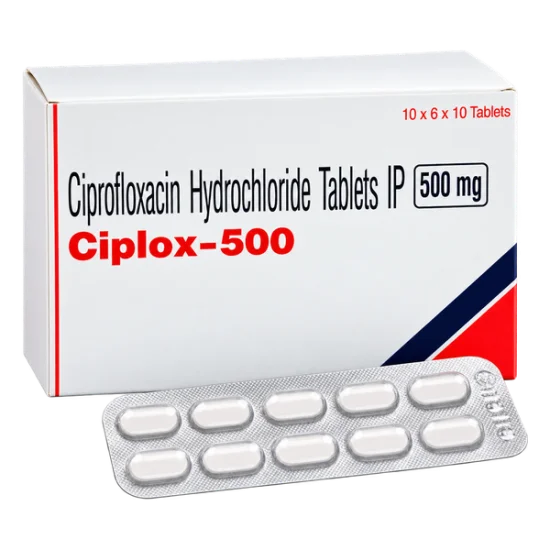
Wellington, took the prescribed 500 mg tablets for a documented urinary infection. He reported improvement after several days, but mild dizziness made him avoid driving until treatment was finished.
Ciplox is an oral ciprofloxacin hydrochloride tablet for selected susceptible bacterial infections. The regimen for the chosen strength should be confirmed with a healthcare professional before starting.
Overview
Ciprofloxacin belongs to the fluoroquinolone class of antibiotics and is used for selected bacterial infections when the likely organism is susceptible. Ciplox contains ciprofloxacin hydrochloride.
Ciprofloxacin Pharmacological Class
Ciprofloxacin blocks bacterial DNA gyrase and topoisomerase IV. These enzymes help bacteria copy and repair their DNA. Blocking them stops bacterial multiplication and can lead to bacterial death.
This mechanism does not make ciprofloxacin suitable for every infection. The diagnosis, infection site, local resistance patterns, previous antibiotic exposure, kidney function, allergies, and other medicines all affect antibiotic selection.
Bacterial Infection Scope
Ciplox may be prescribed for susceptible bacterial infections affecting areas such as the urinary tract, gastrointestinal tract, respiratory system, skin, bones, joints, or other tissues. The exact indication depends on the organism and clinical diagnosis.
Redness, pain, discharge, or fever alone does not prove that bacteria are responsible. Viruses, fungi, inflammation, allergy, and non-infectious conditions can produce similar symptoms.
Formulation
Ciplox contains ciprofloxacin hydrochloride. Ciprofloxacin belongs to the fluoroquinolone class of antibiotics and is used for selected bacterial infections when the likely organism is susceptible. Medsafe and the WHO classify ciprofloxacin as an antibiotic requiring careful selection because resistance and serious adverse effects can limit its use [1].
Ciprofloxacin is absorbed after oral administration and reaches tissues through the bloodstream. The tablet is an oral formulation; eye and ear preparations containing ciprofloxacin follow different dosing and safety considerations.
Therapeutic indications
Ciplox may be prescribed for susceptible bacterial infections affecting areas such as the urinary tract, gastrointestinal tract, respiratory system, skin, bones, joints, or other tissues. The exact indication depends on the organism and clinical diagnosis.
Respiratory, urinary, skin, bone, and gastrointestinal infections can require different antibiotic choices. Local guidelines and culture results may support a narrower antibiotic than ciprofloxacin.
Dosage and administration
The product described here is Ciplox in tablet form. It is taken by mouth and should be used only when a prescriber has selected ciprofloxacin for the diagnosed infection.
Oral Ciprofloxacin
The regimen for the selected Ciplox strength must be confirmed with a healthcare professional before starting. Dose frequency and treatment duration depend on the infection, kidney function, age, severity, and susceptibility of the bacteria.
Swallow the tablet with water. Avoid taking ciprofloxacin at the same time as milk, yoghurt, calcium-fortified drinks, antacids, or mineral supplements because these products can bind the antibiotic and reduce absorption.
Differences Between Dosage Forms
Ciprofloxacin eye or ear drops are intended for local administration. They are not substitutes for Ciplox tablets, and Ciplox tablets should not be used to treat an eye or ear condition without a specific prescription.
The same brand name can appear on products with different active ingredients, routes, or strengths. The active ingredient and dosage form determine how the product works and which conditions it can treat.
Ciplox Administration and Treatment Course
Take Ciplox at the prescribed times and continue for the duration selected for the infection. Do not change the frequency, double a dose, or stop early because symptoms have started to improve.
- Take each tablet with water.
- Swallow the tablet whole unless the prescriber or product information specifically permits another method.
- Keep antacids and mineral supplements separate from ciprofloxacin.
- If a dose is missed, take it when remembered unless the next scheduled dose is near.
- Do not take two doses together to compensate for a missed dose.
- If vomiting occurs soon after taking a tablet, obtain specific advice before repeating the dose.
- Complete the prescribed course unless a prescriber tells you to stop because of an adverse reaction or a change in diagnosis.
Improvement in pain or fever does not prove that the bacteria have been eliminated. Symptoms may improve before the infection has fully resolved.
Kidney impairment can change ciprofloxacin exposure and may require a different regimen. People receiving dialysis, older adults, and those with a history of kidney disease need medication-specific assessment before treatment begins.

Reasons not to use it
Ciplox is not suitable for everyone. The following situations require specific assessment before treatment:
- Previous serious allergic reaction to ciprofloxacin or another quinolone.
- Previous fluoroquinolone-related tendon disorder.
- Significant kidney disease without an adjusted regimen.
- A history of seizures or conditions that lower the seizure threshold.
- Known heart-rhythm problems or use of medicines that prolong the QT interval.
- Myasthenia gravis.
- Pregnancy or breastfeeding unless the prescriber has judged treatment necessary.
- Use of medicines that interact with ciprofloxacin.
Ciprofloxacin can interact with antacids and supplements containing aluminium, magnesium, calcium, iron, or zinc. It may also interact with warfarin, theophylline, certain medicines affecting heart rhythm, some diabetes treatments, and medicines processed through hepatic enzymes. The exact combination determines the risk.
Tizanidine must not be combined with ciprofloxacin because ciprofloxacin can markedly increase tizanidine exposure, causing excessive drowsiness, low blood pressure, and impaired movement. The FDA prescribing information identifies this interaction as contraindicated [3].
When this is not for you
Ciplox is NOT for you if a prescriber has not confirmed a susceptible bacterial infection or if a contraindication applies. It does not treat viral colds, influenza, or fungal disease.
Do not use it without medical advice if you have had a serious reaction to a quinolone, tendon problems after a fluoroquinolone, kidney disease, seizures, heart-rhythm problems, myasthenia gravis, or if you are pregnant or breastfeeding. Tell the prescriber about all medicines, especially tizanidine, warfarin, theophylline, rhythm medicines, antacids, and mineral supplements.
Possible side effects
Ciprofloxacin can cause mild effects such as nausea, loose stools, abdominal discomfort, headache, dizziness, or sleep disturbance. Local reactions are more relevant to topical eye or ear products, while oral Ciplox can produce effects throughout the body. The EMA has issued class-wide safety information for fluoroquinolones because some reactions can persist after treatment ends [2].
Common Local and Systemic Effects
Dizziness may affect driving, cycling, climbing, or machinery use. Wait until you know how Ciplox affects you before undertaking activities requiring balance or rapid reactions.
Mild diarrhoea can occur with antibiotics. Drink suitable fluids unless fluid intake has been restricted for a medical reason. Severe, persistent, or bloody diarrhoea needs medical assessment because antibiotic-associated colitis can occur during treatment or after it has finished.
Some people notice a bitter or unusual taste with ciprofloxacin products, especially with local preparations. A bitter taste alone is usually different from facial swelling, breathing difficulty, or widespread itching.
Serious Fluoroquinolone Reactions
Stop strenuous activity and seek prompt medical assessment for tendon pain, swelling, weakness, or difficulty walking. Ciprofloxacin has also been associated with peripheral neuropathy, which may appear as burning, numbness, tingling, altered sensation, or weakness.
Urgent medical care is needed for:
- Difficulty breathing, wheezing, facial swelling, or throat tightness.
- Fainting, severe palpitations, or a new irregular heartbeat.
- Severe dizziness, confusion, seizure, or marked weakness.
- Extensive blistering, peeling skin, or painful mouth and eye lesions.
- Severe or persistent diarrhoea, especially with blood or fever.
- Sudden vision changes or severe eye symptoms.
Itching does not automatically confirm an allergy. It becomes more concerning when it spreads quickly or occurs with hives, swelling, breathing problems, or dizziness.
How it affects the body
Ciprofloxacin blocks bacterial DNA gyrase and topoisomerase IV. These enzymes help bacteria copy and repair their DNA. Blocking them stops bacterial multiplication and can lead to bacterial death.
Common mistakes
Several practical errors can reduce treatment reliability or increase risk:
- Taking Ciplox with an antacid, iron tablet, zinc supplement, or calcium-rich drink.
- Stopping the course as soon as fever or pain improves.
- Sharing tablets with a family member who has similar symptoms.
- Using leftover antibiotics for a new illness.
- Continuing strenuous exercise after tendon pain begins.
- Ignoring numbness, tingling, severe diarrhoea, or palpitations.
- Forgetting to mention warfarin, tizanidine, theophylline, or rhythm medicines.
- Taking a double dose after missing one.
- Assuming that every discharge or red area is bacterial.
- Using a tablet regimen intended for one infection to treat a different condition.
A bottle tip touching the eye is relevant to topical drops, not to Ciplox tablets. Similarly, bitter taste after eye drops can result from drainage into the throat, while oral Ciplox does not require eye-drop administration techniques.
Comparison
Alternative treatment depends on the infection site, likely organism, resistance pattern, allergy history, kidney function, and the presence of complications. Changing antibiotics after treatment failure requires reassessment rather than self-selection.
| Treatment category | Clinical role | Main limitation |
|---|---|---|
| Ciprofloxacin | Selected susceptible bacterial infections | Fluoroquinolone-specific tendon, nerve, rhythm, and gastrointestinal risks |
| Another fluoroquinolone, such as levofloxacin | Selected infections when its spectrum and patient factors fit | Similar class precautions; not an automatic replacement |
| Antifungal or corticosteroid therapy | Fungal disease or inflammation when specifically diagnosed | Does not replace antibacterial treatment for a bacterial infection |
Clotrimazole-based treatment may be considered for a confirmed fungal ear infection, while a corticosteroid such as loteprednol addresses inflammation rather than bacterial growth. These categories are not routine substitutes for Ciplox.
Respiratory, urinary, skin, bone, and gastrointestinal infections can require different antibiotic choices. Local guidelines and culture results may support a narrower antibiotic than ciprofloxacin.
What doctors say
In clinical practice, prescribers reserve oral ciprofloxacin for situations where its antibacterial spectrum and tissue penetration justify its risks. It is not a routine choice for every cough, sore throat, skin rash, or episode of diarrhoea.
A doctor will usually consider the infection site, recent antibiotic exposure, kidney function, allergy history, tendon problems, neurological symptoms, heart rhythm risk, and current medicines. Culture results may allow treatment to be narrowed or changed.
Treatment success means more than feeling better after the first tablets. The infection should be responding, adverse effects should remain acceptable, and warning symptoms should be acted on quickly.
The WHO AWaRe antibiotic book places emphasis on using antibiotics according to diagnosis, stewardship principles, and local guidance rather than treating symptoms alone [4].
Comparison
Ampicillin
Chloramphenicol
Ciplox Current
Common questions
Is Ciplox suitable during pregnancy or breastfeeding?
Pregnancy and breastfeeding require an individual risk assessment before ciprofloxacin is started. Medsafe product information available in 2025 describes the need to weigh maternal benefit against potential fetal or infant exposure. The prescriber should know about pregnancy, planned pregnancy, or breastfeeding before selecting Ciplox.
How soon does Ciplox begin to produce noticeable improvement?
Some bacterial symptoms may start improving within a few days, but the timing depends on the infection, organism, severity, and tissue involved. FDA ciprofloxacin prescribing information reviewed in 2023 supports completing the prescribed regimen rather than judging success after one or two doses. Worsening symptoms, persistent fever, new severe pain, or failure to improve requires reassessment.
Can Ciplox be taken with antacids or mineral supplements?
Ciplox should not be taken at the same time as aluminium-, magnesium-, calcium-, iron-, or zinc-containing products. Medsafe guidance available in 2025 describes reduced ciprofloxacin absorption when these substances bind the antibiotic in the gut. The timing interval should follow the prescriber’s instructions for the specific product and supplement.
Can the Ciplox tablet be split, crushed, or chewed?
Swallow Ciplox with water unless the prescriber or New Zealand product information gives different instructions. The 2025 Medsafe product information should guide whether a particular tablet may be altered, since crushing can affect handling and may produce an unpleasant taste. Do not improvise a liquid dose from a crushed tablet.
Should Ciplox be taken with food or on an empty stomach?
Ciprofloxacin can be taken with water, but milk, yoghurt, and calcium-fortified drinks can interfere with absorption when taken at the same time. The EMA fluoroquinolone safety information from 2018 supports careful attention to administration and interaction risks. A consistent schedule makes it easier to separate Ciplox from mineral-containing products.
Which habits can help or hinder treatment?
Taking Ciplox at consistent times, maintaining suitable fluid intake, and avoiding strenuous exercise after tendon symptoms begin can support safer treatment. The WHO antibiotic guidance published in 2023 emphasises using antibiotics only for the diagnosed infection and avoiding leftover doses. Alcohol does not treat infection and can make dizziness or stomach upset harder to manage, so limiting it is sensible while symptoms or adverse effects are present.
Do you offer anonymous delivery?
Your order will be securely packed and shipped within 24 hours. This is exactly what your package will look like (images of an actual item sent). It has the size and look of a regular private letter (24x11x0.7 cm) and its contents cannot be seen.
Sources
- Medsafe (2025). New Zealand product information for ciprofloxacin tablets.
- European Medicines Agency (2018). Quinolone- and fluoroquinolone-containing medicinal products: referral safety review.
- U.S. Food and Drug Administration (2023). Ciprofloxacin prescribing information.
- World Health Organization (2023). The WHO AWaRe Antibiotic Book.
Reviews: Ciplox
Gisborne, used Ciplox after a culture-guided prescription. Her symptoms settled, although loose stools appeared near the end of the course and continued briefly afterward.
Hamilton, completed treatment for a bacterial infection and found the tablets manageable with water. He had taken an iron supplement at the same time on the first day, then separated the products after receiving timing instructions.
Auckland, stopped after feeling better and later needed reassessment when symptoms returned. She described the first course as helpful but recognised that stopping early had complicated the outcome.
Tauranga, developed heel discomfort during treatment and contacted his prescriber promptly. He avoided running, and the medicine was reviewed before he resumed exercise.