Skip to content
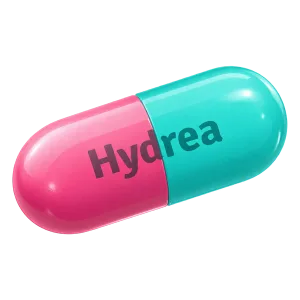
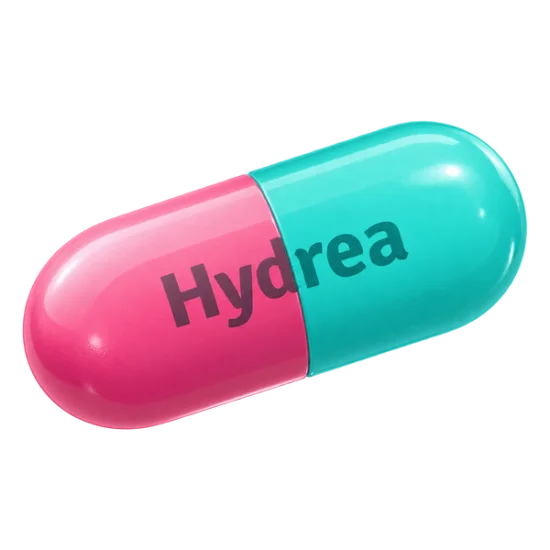
Hydrea
Active ingredient: Hydroxycarbamide

Hydrea

Quality products
24/7 Support
Fast delivery
Delivery from 4 days
Select pack Package Per unit Price

Free delivery on orders from $ 376.00, free express delivery from $ 564.00

Secure Payments
Track your order
Best price guarantee

Hydrea is used for people with selected blood disorders, sickle cell disease, and some cancers. Its active ingredient, hydroxyurea, can increase fetal haemoglobin and slow the growth of rapidly dividing cancer cells, with treatment guided by regular blood tests.

Overview

Hydroxyurea, the active ingredient of Hydrea, is an oral cytoreductive medicine used in selected blood disorders, sickle cell disease, and some cancers. It can increase fetal haemoglobin in sickle cell disease and slow the growth of rapidly dividing cancer cells. Hydrea capsules require prescription-led dosing and regular blood tests.

Formulation

Hydrea contains hydroxyurea, a medicine that reduces the production of certain blood cells and interferes with DNA synthesis. It is used under specialist supervision for selected cancers and for disease modification in sickle cell disease. The prescribed strength and schedule depend on the diagnosis, body size, kidney function, blood counts, and treatment response.

Hydroxyurea is also called hydroxycarbamide in some clinical documents. The term cytoreductive means that treatment lowers the production or number of specific blood cells. Hydrea capsules are not interchangeable with another formulation without confirmation from the prescribing team.

Hydrea is prescription-only treatment in clinical practice. A specialist normally reviews the diagnosis, baseline blood tests, kidney function, pregnancy status where relevant, and other medicines before treatment begins.

Keep a written list of every prescription medicine, over-the-counter product, vitamin, and complementary remedy before the first Hydrea review. This makes interaction checks more reliable.

Therapeutic indications

Hydroxyurea capsules are used for selected leukaemias, some head and neck cancers, and sickle cell disease. The exact indication differs between patients. Oncology or haematology teams choose the treatment goal and monitoring plan according to the diagnosis and local clinical guidance.

Clinical use Main treatment goal Monitoring focus
Sickle cell disease Increase fetal haemoglobin and reduce sickling complications Full blood count, kidney function, treatment response
Selected leukaemias Reduce excessive production of abnormal blood cells Blood counts, symptoms, uric acid, organ function
Some head and neck cancers Slow tumour-cell growth, sometimes within a wider oncology plan Blood counts, skin and mucosal effects, treatment toxicity

Sickle Cell Disease Support

Hydroxyurea may reduce the frequency of painful sickle cell complications over time. It does not act as an immediate painkiller during an acute crisis. Its benefit comes from changing red blood cell behaviour and increasing fetal haemoglobin, which can reduce sickling and vessel blockage.

Some patients may also experience fewer hospital admissions or reduced need for blood transfusions. The response varies, so treatment decisions rely on symptoms, blood results, and adherence rather than on a single good or difficult day.

Cancer Treatment Applications

Hydrea may be used alone or as part of a broader oncology regimen. It slows the production of DNA in rapidly dividing cells, which can limit the growth of certain cancer cells. The same action can affect healthy bone-marrow cells, making scheduled blood-count monitoring necessary.

Dosage and administration

  • Dose: The amount in milligrams or millilitres is prescribed individually according to the treatment purpose and agreed with the doctor or pharmacist.
  • Frequency: Take Hydrea capsules according to the prescribed schedule.
  • Timing: Take the capsules at the time and in relation to meals specified by the prescribing team.
  • Duration: Continue Hydrea for the duration prescribed. Treatment requires regular review and adjustment based on blood-test results and treatment response.
  • Route: Take Hydrea by mouth as capsules. Do not change the dose or take extra capsules after a missed dose unless specifically instructed by the prescribing team.
  • Monitoring: Attend scheduled blood tests, which help guide whether treatment should continue, change, or pause.

Reasons not to use it

Hydrea is contraindicated in people with a known allergy to hydroxyurea or any component of the medicine. It requires specialist assessment and regular blood-count monitoring, particularly when blood-cell production is already significantly reduced.

When this is not for you

regular blood-test monitoring or prescribed handling cannot be maintained; discuss another treatment plan with the prescribing team.

Possible side effects

Hydrea can suppress bone-marrow activity. This may lower white blood cells, red blood cells, or platelets. The risk depends on the dose, treatment duration, kidney function, other therapies, and individual susceptibility.

Possible effects include:

  • Low white blood cell counts, which can increase infection risk.
  • Low red blood cell counts, which may cause tiredness or shortness of breath.
  • Low platelet counts, which can increase bruising or bleeding.
  • Nausea, vomiting, diarrhoea, constipation, or reduced appetite.
  • Mouth ulcers or inflammation.
  • Skin dryness, darkening, rash, or nail changes.
  • Leg ulcers, especially during prolonged treatment.
  • Raised uric acid, which may aggravate gout.
  • Long-term skin changes, including an increased need for sun protection.

Seek prompt medical advice for fever, chills, unusual bleeding, rapidly spreading bruises, severe mouth ulcers, marked weakness, or signs of infection. New or worsening leg wounds also need clinical review rather than prolonged home treatment.

A persistent sore or ulcer deserves attention. Do not cover it repeatedly and wait for it to resolve if it is painful, red, swollen, draining, or slow to heal.

Use sun protection on exposed skin during long-term treatment and report a persistent scaly patch, changing mole, or non-healing wound during routine review.

The Medsafe product information for Hydrea describes blood-count changes, mucocutaneous effects, ulcers, and long-term skin risks as reasons for structured monitoring [2].

How it affects the body

Hydroxyurea inhibits an enzyme called ribonucleotide reductase. This enzyme helps produce the building blocks required for DNA. By reducing those building blocks, hydroxyurea slows DNA synthesis.

In cancer treatment, this effect can slow the growth of rapidly dividing malignant cells. In sickle cell disease, hydroxyurea has a different clinical purpose as well: it increases fetal haemoglobin, also called HbF. Fetal haemoglobin is a form of haemoglobin that does not sickle in the same way as haemoglobin S.

The cause-and-effect sequence is:

  • More fetal haemoglobin can reduce the concentration of sickling haemoglobin.
  • Red blood cells can remain rounder and more flexible.
  • Flexible cells pass through small blood vessels more easily.
  • This may improve blood flow and tissue oxygen delivery.
  • Fewer blockages can mean fewer sickle-cell complications.

Hydroxyurea does not permanently remove the underlying genetic cause of sickle cell disease. The FDA prescribing information describes its action on DNA synthesis and its need for ongoing blood-count surveillance [1].

Common mistakes

Common problems include:

  • Taking extra capsules after a missed dose.
  • Stopping treatment because symptoms have improved.
  • Assuming a similar diagnosis means another patient's schedule is suitable.
  • Missing blood tests because the patient feels well.
  • Opening or crushing a capsule without specific instructions.
  • Failing to report fever, bleeding, mouth ulcers, or leg wounds.
  • Starting a complementary product without an interaction review.
  • Not mentioning zidovudine, stavudine, radiation, or another chemotherapy medicine.
  • Forgetting to report pregnancy, planned conception, or breastfeeding.
  • Treating Hydrea as an immediate painkiller during an acute sickle-cell crisis.

The practical correction is simple: keep the prescribed schedule, attend the planned monitoring, and report specific warning symptoms promptly.

Comparison

Generic hydroxyurea contains the same active substance as Hydrea, but products can differ in strength, capsule design, formulation, approved indications, and local product information. A change should be confirmed by a prescriber or pharmacist.

Option Active substance Clinical consideration
Hydrea Hydroxyurea Use according to the prescribed diagnosis and formulation
Generic hydroxyurea Hydroxyurea Brand or formulation changes require verification
Other hydroxyurea formulations Hydroxyurea Strength, indications, and dosing instructions may differ

A product containing the same active substance is not automatically suitable for every patient. The diagnosis, prescribed strength, kidney function, blood-count targets, and formulation must all match.

What doctors say

A clinician assessing Hydrea will usually focus on three questions: is the treatment appropriate for the diagnosis, is the dose producing the intended response, and are the blood counts remaining within an acceptable range?

For sickle cell disease, symptom improvement may take time and is assessed through pain episodes, admissions, transfusion requirements, fetal haemoglobin, and laboratory results. For cancer treatment, the response is judged through the disease-specific oncology plan rather than through day-to-day sensations.

A normal day does not replace a blood test. Bone-marrow suppression can begin before a patient feels unwell.

Clinical teams also review adherence, kidney function, skin changes, ulcers, pregnancy plans, and new medicines at follow-up appointments. Long-term treatment should not be stopped suddenly without contacting the prescribing team, because interruption may remove the intended disease-modifying or anticancer benefit.

Comparison

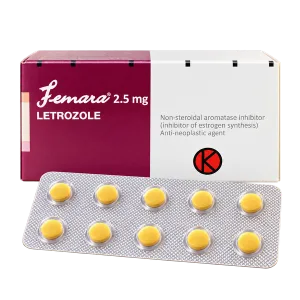
Femara

Active ingredient: Letrozole
2.5mg
From $ 180.48
pills
3.6 (4)

Hydrea Current

Active ingredient: Hydroxycarbamide
500mg
From $ 212.44
pills
3.7 (3)

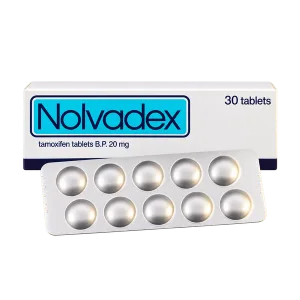
Nolvadex

Active ingredient: Tamoxifen
10mg 20mg
From $ 167.32
pills
3.9 (4)

Compare all medicines for Oncology

Common questions

What should I do if the expected result does not come?

Response to Hydrea depends on the diagnosis, treatment goal, dose, kidney function, blood counts, and duration of therapy. The FDA prescribing information from 2023 states that hydroxyurea treatment requires ongoing assessment rather than symptom-based dose changes. A lack of improvement should be discussed with the treating team, which may review adherence, laboratory results, disease activity, and alternative treatment strategies.

Which condition rules Hydrea out completely?

A known serious allergy to hydroxyurea is a clear reason not to use it. Severe uncontrolled bone-marrow suppression can also prevent treatment from starting or require an interruption until recovery. Medsafe product information from 2025 also supports careful review of kidney disease, pregnancy, severe cytopenias, and interacting treatment before prescribing.

What is the best time of day to take Hydrea?

There is no single time of day that suits every Hydrea regimen. The best schedule is the one prescribed for the patient's diagnosis and treatment plan, taken consistently so that monitoring reflects regular exposure. The WHO sickle-cell guidance published in 2010 supports consistent administration with planned laboratory follow-up rather than changing timing according to daily symptoms.

How long does one Hydrea dose keep working?

Hydroxyurea affects cellular DNA synthesis and blood-cell production over time, so its clinical action is not like an immediate pain-relief dose that can be felt for a fixed number of hours. The FDA label from 2023 describes treatment as a continuing regimen requiring dose adjustments and blood-count monitoring. The duration of effect therefore depends on the dose, kidney clearance, treatment indication, and the patient's response.

Can older adults use Hydrea?

Older adults may use Hydrea when the treating team considers the expected benefit appropriate. Age-related changes in kidney function, co-existing illnesses, nutritional status, and other medicines can increase the need for careful dose selection and monitoring. Medsafe clinical information reviewed in 2025 supports checking blood counts and organ function regularly rather than assuming that a standard adult schedule is suitable.

How does Hydrea differ from the closest alternative?

Hydrea and generic hydroxyurea products use hydroxyurea as the active substance, so the main comparison concerns strength, formulation, approved use, and prescribing information. A different treatment for sickle cell disease or cancer may work through another biological pathway and may have a different monitoring burden. The EMA Summary of Product Characteristics (SmPC) for hydroxycarbamide (2024) requires treatment selection to follow the indication and authorised formulation rather than brand similarity alone.

Can Hydrea capsules be split, crushed, or chewed?

Hydrea capsules should not be opened, crushed, chewed, or split unless a healthcare professional gives formulation-specific instructions. Breaking the capsule can expose the handler to hydroxyurea powder and may alter how the dose is taken. The FDA label from 2023 emphasises careful handling of capsules and avoidance of unnecessary exposure, especially when a capsule is damaged.

Do you offer anonymous delivery?

Your order will be securely packed and shipped within 24 hours. This is exactly what your package will look like (images of an actual item sent). It has the size and look of a regular private letter (24x11x0.7 cm) and its contents cannot be seen.

Sources

  1. U.S. Food and Drug Administration (2023). HYDREA (hydroxyurea) capsules, prescribing information.
  2. Medsafe (2025). Hydrea Data Sheet.

Reviews: Hydrea

3.7
Based on 3 reviews
Daniel, 69 Lower Hutt Several months
Verified
Rating: 3.5 out of 5

The first blood tests were frequent, which took some organising around work and appointments. I did not notice a dramatic day-to-day change, but my haematology team said the laboratory results supported continuing. I had mild stomach upset early on, which settled.

10 Nov 2026
Richard, 45 Nelson About three months
Verified
Rating: 4 out of 5

The treatment was manageable, but I developed a sore area near my ankle that took longer to heal than expected. I initially covered it and carried on. After reporting it, the clinic reviewed the treatment and the wound more closely.

12 Oct 2026
Thomas, 45 Hamilton Longer-term treatment
Verified
Rating: 3.5 out of 5

The main difficulty was remembering blood-test appointments when I felt normal. I also missed a dose once and nearly doubled the next one. The pharmacy team told me to follow the missed-dose plan instead, which avoided that mistake.

26 Oct 2026
Get our free app Shop faster and track your orders 3.8 · 361 reviews Install