Skip to content
Motilium
Active ingredient: Domperidone

Motilium

Quality products
24/7 Support
Fast delivery
Delivery from 4 days
Select pack Package Per unit Price

Free delivery on orders from $ 376.00, free express delivery from $ 564.00

Secure Payments
Track your order
Best price guarantee

Domperidone, the active ingredient of Motilium, is an antiemetic for nausea and vomiting. The amount used per intake is selected individually, and the medicine supports upper-gastrointestinal movement and gastric emptying.

Overview

The medicine also supports upper-gastrointestinal movement and gastric emptying.

Formulation

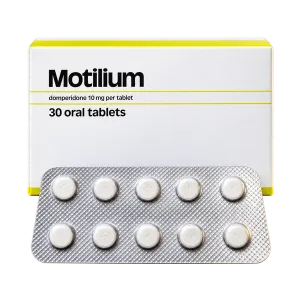
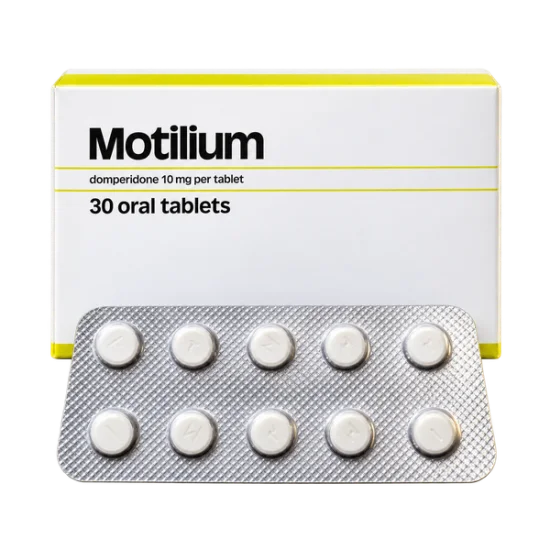
Motilium contains domperidone, a peripheral dopamine D2-receptor antagonist. The amount used per intake is selected individually rather than being one fixed amount for everyone. The product is supplied as tablets, with 30 oral tablets in the presentation described for this page.

Domperidone acts mainly outside the brain because it crosses the blood–brain barrier less readily than some other dopamine-blocking medicines. Its pharmacological effects include reducing signals that trigger nausea and vomiting and supporting coordinated movement in the upper digestive tract [1].

The medicine is intended for short-term treatment. It should not be used continuously for unexplained digestive symptoms, persistent vomiting, or recurrent abdominal pain without identifying the cause.

Domperidone works best when taken before food. Taking it after a large meal may delay absorption and reduce the benefit of the planned dose.

Therapeutic indications

Motilium is classified as an antiemetic. Antiemetics reduce nausea, vomiting, or both by acting on chemical signals between the digestive system and the vomiting centre in the brain.

Domperidone may be prescribed for:

  • Nausea and vomiting in suitable adults and adolescents who meet the relevant weight and age requirements.
  • Symptoms linked to delayed movement of food through the upper gastrointestinal tract.
  • Short-term upper-digestive symptoms where a clinician considers improved gastric motility useful.
  • Nausea associated with a temporary gastrointestinal illness, after more serious causes have been excluded.

The medicine does not treat every cause of vomiting. Blood in vomit, severe or worsening abdominal pain, a swollen abdomen, fainting, confusion, high fever, or signs of dehydration require prompt medical assessment rather than repeated antiemetic doses. The European Medicines Agency and the UK's Medicines and Healthcare products Regulatory Agency (MHRA) identify increased heart-rhythm risk with higher doses, longer treatment, certain illnesses, and interacting medicines [2].

Domperidone can reduce the sensation of nausea without correcting an underlying infection, obstruction, inflammation, migraine, pregnancy-related illness, or metabolic problem. Vomiting that continues despite treatment needs clinical review.

Dosage and administration

  • Take the tablet by mouth with water.
  • Take it before meals, rather than immediately after eating.
  • Use the individually prescribed amount per intake.
  • Keep treatment as short as clinically appropriate.
  • Do not take extra tablets to compensate for vomiting unless a clinician has given specific instructions.
  • If a dose is missed, take it when remembered if the next dose is not close; skip it when the next dose is due soon.
  • Never double the next dose after a missed tablet.

The tablet strength refers to the amount of domperidone in each tablet. The amount used per intake is selected individually rather than being one fixed amount for everyone or continuing treatment for the same period.

Do not crush or chew the tablet unless a prescriber or pharmacist has specifically confirmed that this is suitable for the supplied formulation. Swallowing the tablet whole with water provides the intended oral administration.

If vomiting occurs soon after a dose, do not automatically repeat the tablet. The amount absorbed depends on timing, and taking another dose can unintentionally increase exposure.

Reasons not to use it

  • You have a known prolonged QT interval or a serious heart-rhythm disorder.
  • You have significant heart failure or another clinically important cardiac condition.
  • You have moderate or severe liver impairment.
  • You have gastrointestinal bleeding, mechanical obstruction, or perforation.
  • You have a prolactin-secreting pituitary tumour.
  • You have had an allergic reaction to domperidone or an excipient in the tablet.
  • You take a medicine that strongly inhibits CYP3A4 and may also prolong the QT interval.
  • You take another medicine known to prolong the QT interval.

Examples of interacting groups include some macrolide antibiotics, azole antifungals, antiarrhythmics, and other medicines with recognised QT effects. Strong CYP3A4 inhibitors can raise domperidone concentrations, while combined QT-prolonging effects can increase the chance of arrhythmia. The European Medicines Agency specifically advises against combining domperidone with potent CYP3A4 inhibitors or QT-prolonging medicines [4].

Tell the prescriber about kidney disease, liver disease, fainting episodes, palpitations, family history of sudden cardiac death, and any recent illness involving prolonged diarrhoea or vomiting. Pregnancy and breastfeeding require an individual benefit–risk decision because domperidone can increase prolactin and may pass into breast milk.

When this is not for you

Motilium may not be suitable if you have heart-rhythm problems, serious heart failure, significant liver disease, gastrointestinal bleeding or blockage, or a pituitary tumour that produces prolactin. It may also be unsuitable if you are allergic to domperidone or take certain antibiotics, antifungals, heart medicines, or other drugs that affect heart rhythm. Speak to a prescriber before use if you have kidney disease, fainting, palpitations, a family history of sudden cardiac death, pregnancy, breastfeeding, or prolonged vomiting or diarrhoea.

Possible side effects

  • Dry mouth.
  • Headache.
  • Drowsiness or tiredness.
  • Abdominal cramping.
  • Diarrhoea.
  • Skin rash or itching.
  • Increased breast tenderness or breast milk production caused by raised prolactin.

Most mild effects are temporary, but a new rash with facial swelling, breathing difficulty, or severe weakness requires urgent medical attention. Stop and seek urgent assessment for fainting, rapid or irregular heartbeat, seizure, or severe dizziness.

The main serious concern is prolongation of the QT interval, an electrical change that can trigger a dangerous ventricular rhythm. Risk is higher in people with existing heart disease, slow heart rate, electrolyte disturbances, significant liver impairment, or exposure to medicines that prolong the QT interval. Medsafe safety information identifies cardiac arrhythmia as a key domperidone risk requiring careful patient selection [3].

A practical detail is easy to miss: severe diarrhoea or repeated vomiting can disturb potassium and magnesium levels. Those electrolyte changes may increase cardiac vulnerability, so continuing self-treatment during significant fluid loss is unsafe. A clinician may need to assess hydration and electrolyte status when fluid loss is substantial. Seek medical advice if vomiting or diarrhoea prevents you from keeping fluids down. Do not restart domperidone without reviewing the cause of the fluid loss.

How it affects the body

Domperidone is a peripheral dopamine D2-receptor antagonist. It acts mainly outside the brain because it crosses the blood–brain barrier less readily than some other dopamine-blocking medicines. Its pharmacological effects include reducing signals that trigger nausea and vomiting and supporting coordinated movement in the upper digestive tract [1].

Common mistakes

Several habits can make treatment less useful or less safe:

  • Taking Motilium after meals despite instructions to use it before food.
  • Repeating a dose because vomiting occurred soon afterwards.
  • Taking it alongside another antiemetic without checking for interaction.
  • Continuing treatment for weeks because symptoms return after stopping.
  • Ignoring palpitations, fainting, or marked dizziness.
  • Sharing tablets with another person who has similar nausea.
  • Forgetting to mention antibiotics, antifungals, antidepressants, or heart medicines.
  • Assuming a 10 mg tablet means the same number of tablets is suitable for everyone.
  • Using domperidone to suppress vomiting while delaying assessment of severe abdominal pain or dehydration.
Before starting, make a complete list of prescription medicines, over-the-counter products, and supplements. The most useful detail is the active ingredient and dosing schedule, not only the brand name.

Comparison

Motilium is a brand name for a domperidone-containing product. A generic domperidone medicine contains the same active pharmaceutical ingredient and belongs to the same antiemetic class, although its inactive ingredients, tablet appearance, manufacturer, and approved presentation may differ.

Medicine category Main pharmacological role Practical distinction
Motilium / domperidone Peripheral dopamine D2 blockade and upper-gastrointestinal motility support Cardiac and interaction screening is essential
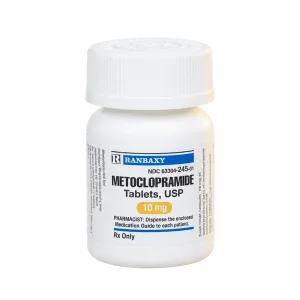
Metoclopramide Dopamine blockade with stronger central nervous system activity Movement-related adverse effects can be more prominent
Serotonin 5-HT3 antagonist Blocks serotonin pathways involved in vomiting Often selected for specific postoperative, chemotherapy-related, or severe nausea settings

The choice depends on the cause of nausea, age, heart history, other medicines, and the expected duration of treatment. A generic domperidone tablet is pharmacologically comparable when it has the same approved strength and route, but “generic” does not mean that every tablet contains identical excipients or has the same licensed indications.

What doctors say

In clinical practice, doctors usually treat domperidone as a short-course symptom medicine, not a solution for unexplained recurrent vomiting. The first task is to assess whether the symptoms could indicate obstruction, gastrointestinal bleeding, severe infection, medication toxicity, pregnancy, or a neurological condition.

A clinician will usually review the person’s heart history and current medicines before prescribing. This review matters even when the planned course seems brief, because QT risk depends on the combination of patient factors and interacting medicines.

Doctors also look for a clear stopping point. If nausea settles, continued dosing may add risk without adding benefit. If symptoms do not settle, increasing the dose independently is the wrong response; the diagnosis and treatment plan need review.

Domperidone is not automatically the best antiemetic for every patient. A prescriber may choose a different treatment when nausea is caused by migraine, chemotherapy, postoperative illness, vestibular disease, pregnancy, or a medicine that already affects cardiac rhythm.

Comparison

Metoclopramide

Active ingredient: Metoclopramide
10mg
From $ 165.44
pills
4.2 (3)

Motilium Current

Active ingredient: Domperidone
10mg
From $ 144.76
pills
4 (3)

Compare all medicines for Nausea and Vomiting

Common questions

What happens when Motilium is stopped, and does it need tapering?

Domperidone is generally used as a short course, so tapering is not usually required when the prescribed course ends. Symptoms may return if the underlying cause remains, but that does not mean the dose should be increased independently. Medsafe guidance from 2014 supports using the lowest suitable dose for the shortest appropriate duration, with reassessment when symptoms persist.

Can the Motilium tablet be split, crushed, or chewed?

The tablet should normally be swallowed with water rather than chewed. Splitting or crushing can make administration less reliable and may be unsuitable if the supplied formulation has specific tablet characteristics. Medsafe product information from 2014 advises using the dosage form as authorised and obtaining confirmation before altering it, especially when swallowing is difficult.

Can alcohol be used while taking Motilium?

Alcohol may worsen drowsiness, dizziness, dehydration, and stomach irritation during an episode of nausea or vomiting. It can also make it harder to recognise whether symptoms are improving or becoming more serious. WHO educational material published in 2020 supports avoiding alcohol during acute gastrointestinal illness and while taking medicines that may affect alertness.

Should Motilium be taken with food or on an empty stomach?

Motilium is generally taken before meals because food can delay absorption. Taking it shortly before eating allows the dose to be present as the stomach begins processing food. Medsafe product information from 2014 describes pre-meal administration as the practical timing instruction for domperidone tablets.

What should be checked with a doctor before starting Motilium?

Discuss heart-rhythm problems, fainting, liver disease, kidney disease, pregnancy, breastfeeding, and any history of gastrointestinal bleeding or obstruction. Provide a full list of medicines, since macrolide antibiotics, azole antifungals, antiarrhythmics, and other QT-prolonging treatments may be unsuitable with domperidone. The EMA safety review from 2014 remains the key regulatory reference for these screening questions.

Can Motilium affect driving, concentration, or work with machinery?

Domperidone can cause drowsiness, dizziness, or headache in some people. Avoid driving, cycling on roads, or operating machinery until you know how the tablet affects you, especially after the first dose or when you are already dehydrated. New Zealand medicines safety information from Medsafe in 2014 supports stopping the activity and seeking advice if marked dizziness, faintness, or palpitations develops.

Is Motilium suitable for anyone under 18?

Use in people under 18 depends on age, body weight, indication, and local prescribing information. It should not be given to a child simply because an adult in the household has used it. The EMA paediatric review published in 2014 restricted routine use in younger patients and reinforced the need for careful selection, dose control, and cardiac risk assessment.

Do you offer anonymous delivery?

Your order will be securely packed and shipped within 24 hours. This is exactly what your package will look like (images of an actual item sent). It has the size and look of a regular private letter (24x11x0.7 cm) and its contents cannot be seen.

Sources

  1. European Medicines Agency (2014). Domperidone-containing medicines: referral under Article 31 of Directive 2001/83/EC — assessment report.
  2. European Medicines Agency (2014). CMDh confirms recommendations on restricting use of domperidone-containing medicines.
  3. Medsafe (2014). Motilium 10 mg tablets: data sheet.
  4. European Medicines Agency (2014). Motilium and associated names: product information and safety restrictions.

Reviews: Motilium

4
Based on 3 reviews
Ryan, 42 Greymouth Two days
Verified
Rating: 5 out of 5

The nausea eased within the first day, and I could keep fluids down. I noticed a dry mouth, so I drank water regularly. I stopped when the short course ended.

15 Nov 2026
Paul, 33 Masterton One day
Verified
Rating: 3.5 out of 5

It helped with the urge to vomit, but the improvement was not complete. I still had cramps and loose stools. I was glad the clinician told me not to keep taking it once the planned course was over.

19 Oct 2026
Thomas, 26 New Plymouth One day
Verified
Rating: 3.5 out of 5

The nausea improved, although I felt slightly sleepy afterwards. I avoided driving until I knew how I reacted. The tablet helped the symptom, but it did not remove the stomach discomfort.

4 Nov 2026
Get our free app Shop faster and track your orders 3.8 · 361 reviews Install