Skip to content
Inspra
Active ingredient: Eplerenone

Inspra

Quality products
24/7 Support
Fast delivery
Delivery from 4 days
Select pack Package Per unit Price

Free delivery on orders from $ 376.00, free express delivery from $ 564.00

Secure Payments
Track your order
Best price guarantee

Inspra contains eplerenone, which blocks aldosterone’s effects on the heart, blood vessels, and kidneys. It is prescribed for adults with selected forms of heart failure after myocardial infarction and may also be used to lower blood pressure in adults with hypertension.

Overview

By limiting sodium retention and reducing cardiovascular strain, eplerenone supports better fluid balance and cardiac function.

Eplerenone is a selective aldosterone receptor antagonist. It belongs to the mineralocorticoid receptor antagonist class, alongside older non-selective agents, but has greater selectivity for the mineralocorticoid receptor.

Formulation

The product is supplied as tablets. The active substance is eplerenone. The amount taken at one time is determined individually rather than being a single fixed amount. The correct strength for an individual depends on the treatment indication, kidney function, potassium level, and other medicines.

Therapeutic indications

Inspra contains eplerenone, which blocks aldosterone’s effects on the heart, blood vessels, and kidneys. It is prescribed for adults with selected forms of heart failure after myocardial infarction and may also be used to lower blood pressure in adults with hypertension. By limiting sodium retention and reducing cardiovascular strain, eplerenone supports better fluid balance and cardiac function.

Cardiovascular Applications and Post-Infarction Management

After a myocardial infarction, some patients develop reduced left ventricular function and clinical heart failure. Aldosterone can worsen this process by promoting sodium and water retention, potassium loss, vascular effects, and structural changes in cardiac tissue. Eplerenone helps counter these effects when used as part of a broader treatment plan involving appropriate cardiovascular medicines and monitoring [1].

Inspra may also be prescribed for hypertension. Blood-pressure treatment with eplerenone requires attention to kidney function and serum potassium because the medicine can raise potassium levels, especially in people with reduced renal clearance or diabetes.

Dosage and administration

The amount per intake is set individually for each person rather than being one fixed number. Prescribers select the regimen according to the indication, kidney function, serum potassium, age, and other cardiovascular medicines.

The tablet is taken by mouth, usually once daily, with or without food. Treatment duration depends on the underlying cardiovascular condition and the prescriber’s plan.

Practical administration points

  • Swallow the tablet with water.
  • Take it at a consistent time each day.
  • Follow the prescribed strength and frequency.
  • Do not take extra tablets to compensate for a missed dose.
  • Keep scheduled potassium and kidney-function tests.
  • Do not start potassium supplements or potassium-containing salt substitutes without medical approval.
  • Report vomiting, diarrhoea, dehydration, or a sudden reduction in urine output.

A missed dose should generally be taken when remembered unless the next dose is due soon. In that situation, skip the missed dose and return to the normal schedule. Taking two doses together can increase the risk of excessive potassium levels and dizziness.

A morning dose may fit more easily into a routine because it is easier to remember alongside breakfast, even though eplerenone can be taken with or without food. The key point is a steady daily schedule rather than a particular meal.

Blood tests are central to safe dose adjustment. Serum potassium and renal function are commonly assessed before treatment, shortly after initiation or dose changes, and periodically during ongoing therapy. The New Zealand regulator Medsafe highlights the need for laboratory monitoring with medicines that affect potassium balance [3].

Reasons not to use it

Inspra is not suitable for everyone. The decision depends on the indication and laboratory results, with stricter restrictions applying in some hypertension treatment settings.

  • You have current hyperkalaemia above the permitted treatment threshold.
  • You have severe renal impairment or substantially reduced creatinine clearance.
  • You are taking a strong CYP3A4 inhibitor such as itraconazole, clarithromycin, or ketoconazole.
  • You have a known allergy to eplerenone or an excipient in the tablet.
  • You are using another potassium-sparing diuretic without a specific prescribing plan.
  • You have type 2 diabetes with microalbuminuria when eplerenone is being considered for hypertension.
  • You cannot undergo the blood tests needed to monitor potassium and kidney function.

Pregnancy and breastfeeding require an individual clinical decision because treatment benefits must be weighed against potential risks. Kidney function affects eplerenone clearance. Reduced clearance can increase exposure and make hyperkalaemia more likely.

When this is not for you

People with chronic kidney disease, diabetes, dehydration, low blood pressure, or previous electrolyte abnormalities require closer assessment.

Potassium results can also change after an acute illness, a change in diet, or the addition of another medicine.

Pregnancy and breastfeeding require an individual clinical decision because treatment benefits must be weighed against potential risks.

Possible side effects

The main safety concern with Inspra is hyperkalaemia, meaning an abnormally high potassium concentration in the blood. The risk increases with kidney impairment, diabetes, older age, dehydration, and concurrent medicines that raise potassium. Some people have no symptoms, so blood testing is more reliable than waiting for warning signs.

Possible adverse effects include:

  • Raised serum potassium.
  • Dizziness or light-headedness.
  • Headache.
  • Nausea, diarrhoea, or abdominal discomfort.
  • Reduced kidney function.
  • Low blood pressure.
  • Tiredness or weakness associated with electrolyte disturbance.

Mild dizziness may occur when blood pressure falls, especially after starting treatment or increasing the dose. Standing up slowly can reduce the chance of a fall. Persistent dizziness, fainting, or unusual weakness needs prompt medical review because it may indicate hypotension, kidney problems, or a potassium disturbance.

Urgent assessment is needed for palpitations, chest discomfort, severe muscle weakness, sudden marked fatigue, fainting, or difficulty breathing. Hyperkalaemia can affect cardiac conduction and may become serious without obvious early symptoms.

A small practical point matters here: diarrhoea and vomiting can change kidney function quickly. Even when Inspra was previously tolerated, dehydration can alter the medicine’s safety profile and may require temporary clinical review.

Avoid potassium-based salt substitutes unless the prescribing clinician has approved them. They can add a substantial potassium load without feeling like a conventional supplement.

Eplerenone usually has less sex-hormone receptor activity than spironolactone. This may reduce some endocrine adverse effects associated with spironolactone, though it does not remove the need for potassium and renal monitoring.

How it affects the body

Eplerenone binds selectively to mineralocorticoid receptors. These receptors respond mainly to aldosterone, a hormone produced by the adrenal glands. Aldosterone acts in the distal nephron, a part of the kidney involved in controlling sodium, water, and potassium handling.

When aldosterone stimulates these receptors, the kidneys retain more sodium. Water follows sodium, which can increase circulating fluid volume and contribute to higher blood pressure or congestion in heart failure. Aldosterone also promotes potassium excretion.

By blocking the receptor, Inspra reduces aldosterone-mediated sodium retention and limits potassium loss. The result is a change in renal electrolyte handling rather than a direct increase in urine production comparable to a conventional loop diuretic. Eplerenone can still contribute to fluid and blood-pressure control through its hormonal mechanism.

The main pharmacological effects include:

  • Reduced aldosterone activity at mineralocorticoid receptors.
  • Less sodium retention in the kidney.
  • Reduced tendency toward aldosterone-related fluid expansion.
  • Increased risk of potassium accumulation.
  • Possible reduction in aldosterone-related cardiac and vascular remodelling.

Eplerenone is metabolised mainly through the CYP3A4 enzyme pathway. Medicines that strongly inhibit this pathway can increase eplerenone exposure and raise the risk of adverse effects. The European Medicines Agency describes this interaction pathway in the product information for eplerenone [2].

The mechanism differs from that of medicines that act on the renin-angiotensin system earlier in the pathway. An ACE inhibitor reduces formation of angiotensin II, while an angiotensin receptor blocker prevents angiotensin II from stimulating its receptor. Inspra acts at the mineralocorticoid receptor, downstream from these processes.

Common mistakes

Several practical errors can reduce treatment safety or make the results difficult to interpret:

  • Taking an extra tablet after forgetting a dose.
  • Starting potassium supplements without approval.
  • Using potassium-based salt substitutes routinely.
  • Taking ibuprofen or another NSAID frequently without reporting it.
  • Missing blood tests because there are no symptoms.
  • Stopping treatment abruptly after one normal blood-pressure reading.
  • Continuing the usual regimen during severe vomiting, diarrhoea, or dehydration without seeking advice.
  • Assuming that a lower tablet strength can be doubled whenever blood pressure rises.
  • Sharing tablets with a family member who has heart failure or hypertension.

One common misunderstanding is that dizziness always means the medicine must be stopped permanently. Dizziness can reflect low blood pressure, dehydration, another medicine, or an electrolyte problem, so the cause needs assessment before the regimen is changed.

Another mistake is judging potassium status from how a person feels. Hyperkalaemia may be silent until it becomes clinically significant. Scheduled testing remains necessary even when treatment seems uneventful.

Comparison

Treatment alternatives are selected by mechanism and clinical need rather than by brand name alone:

Treatment approach Main role
Eplerenone Selective mineralocorticoid receptor blockade in selected heart failure or hypertension cases
Other mineralocorticoid receptor antagonists Aldosterone blockade, with differences in receptor selectivity and adverse-effect profiles
ACE inhibitor or angiotensin receptor blocker Reduction of angiotensin-driven vasoconstriction and aldosterone signalling
Loop or thiazide-type diuretic Fluid removal and blood-pressure support through increased renal sodium excretion

These categories are not interchangeable at the same dose. A prescriber chooses among them after considering ejection fraction, congestion, blood pressure, kidney function, potassium, diabetes status, and the complete treatment regimen.

What doctors say

In clinical practice, doctors usually focus on three questions before prescribing eplerenone: why aldosterone blockade is needed, whether the kidneys can handle the treatment, and whether potassium can be monitored safely.

For post-infarction heart failure, the medicine is generally considered within a broader cardiovascular regimen. It does not replace treatment for blocked coronary arteries, fluid overload, rhythm problems, or uncontrolled blood pressure. The benefit depends on using it for the right indication and maintaining follow-up.

A physician will also review the complete medicine list. An apparently routine anti-inflammatory painkiller can matter when kidney function is borderline. A salt substitute can matter when potassium is already near the upper limit.

The treatment may be adjusted after laboratory results even when the patient feels well. That is not a sign that the medicine has failed; it reflects the way eplerenone’s risks are managed.

Keep a written list of prescription medicines, pain relievers, vitamins, and electrolyte products. Bringing the list to appointments makes interaction checks faster and more accurate.

Comparison

Arjuna

Active ingredient: Terminalia arjuna
250mg
From $ 251.92
pills
3.5 (5)

Digoxin

Active ingredient: Digoxin
0.25mg
From $ 176.72
pills
4.3 (4)

Entresto

Active ingredient: Valsartan
24mg26mg
From $ 214.32
tablets
3.5 (4)

Inspra Current

Active ingredient: Eplerenone
25mg 50mg
From $ 417.36
pills
3.9 (4)

Compare all medicines for Heart Disease

Common questions

Which symptoms mean I should stop taking Inspra and seek urgent medical attention?

Palpitations, fainting, severe muscle weakness, chest discomfort, marked shortness of breath, or sudden extreme fatigue require urgent assessment because they can occur with serious potassium or cardiovascular problems. Medsafe (2020) safety information supports prompt evaluation of suspected serious adverse reactions linked to electrolyte-active medicines [4]. Medsafe (2020) also advises prompt contact when dehydration may affect renal function. Do not take an extra dose while waiting for urgent advice. Severe vomiting, persistent diarrhoea, or very low urine output also warrants rapid clinical contact because dehydration can worsen kidney function.

How long does one Inspra dose keep working?

Eplerenone is intended for regular daily treatment, so one dose contributes to ongoing aldosterone-receptor blockade rather than producing a short, easily felt effect. Blood-pressure and heart-failure benefits develop through consistent use and clinical follow-up, not through taking an additional tablet when symptoms fluctuate. The EMA (2016) product information describes once-daily administration and dose adjustment according to response, kidney function, and potassium monitoring. A single missed dose does not mean that the treatment has permanently stopped working, but repeated missed doses can reduce the intended therapeutic effect.

Can people under 18 use Inspra?

Inspra is generally intended for adult treatment, and routine use in children and adolescents is not established in the same way as adult therapy. The EMA (2016) paediatric information for eplerenone does not support treating it as a standard self-managed medicine for people under 18. A specialist may consider treatment in an unusual clinical situation, but the decision requires paediatric expertise, laboratory monitoring, and an appropriate indication. Young people should not use another person’s tablets for blood pressure or heart symptoms.

What should I do after a missed dose?

Take the missed tablet when remembered if the next scheduled dose is not near. If the next dose is due soon, skip the missed tablet and take the next dose at the usual time. The FDA (2017) prescribing information for eplerenone supports avoiding double dosing after a missed dose because extra exposure may increase dizziness, kidney stress, or potassium elevation. Do not change the next dose to compensate, and mention repeated missed doses at the next clinical review.

Can the tablet be split, crushed, or chewed?

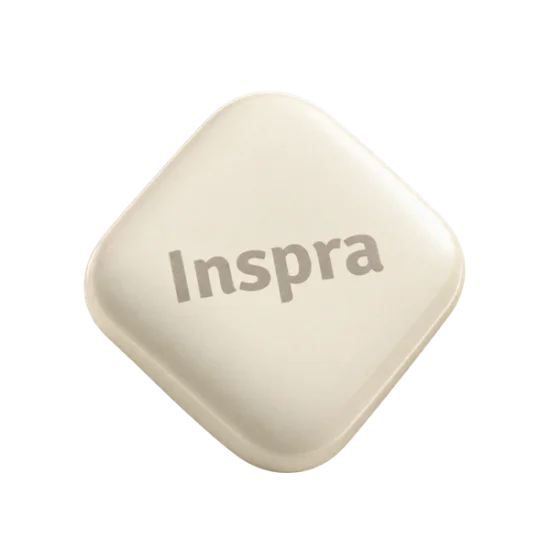
Swallow the tablet with water unless a prescriber or medicines professional has given different instructions for the specific formulation. Crushing or chewing can make swallowing unpleasant and may interfere with accurate dose administration if the tablet is not designed to be divided. The FDA (2017) Inspra product information should determine whether a particular tablet may be split, especially when a lower strength is required. Do not create a smaller dose by guessing from the tablet’s appearance.

Do you offer anonymous delivery?

Your order will be securely packed and shipped within 24 hours. This is exactly what your package will look like (images of an actual item sent). It has the size and look of a regular private letter (24x11x0.7 cm) and its contents cannot be seen.

Sources

  1. European Medicines Agency (2016). Summary of Product Characteristics (SmPC) — eplerenone.
  2. European Medicines Agency (2016). Product information — eplerenone.
  3. Medsafe (2020). Data Sheet: Inspra tablets.
  4. U.S. Food and Drug Administration (2017). Inspra (eplerenone) Prescribing Information.

Reviews: Inspra

3.9
Based on 4 reviews
Graham L., 69 Ashburton Several months
Verified
Rating: 4 out of 5

Ashburton, took the prescribed 25 mg tablet after a heart attack and continued it for several months. He reported no dramatic sensation from the medicine, but follow-up blood tests helped his cardiology team adjust treatment. He found the potassium warnings easy to overlook at first.

12 Oct 2026
Gary, 30 Masterton One week
Verified
Rating: 3.5 out of 5

Masterton, used a 25 mg Inspra tablet as part of treatment for high blood pressure for one week. He noticed mild dizziness during that week when standing quickly, which settled after his clinician reviewed the wider treatment plan. He appreciated that the tablets fitted into his morning routine but disliked needing repeat blood tests.

24 Oct 2026
Craig, 49 Palmerston North Several weeks
Verified
Rating: 4 out of 5

Palmerston North, took a 25 mg tablet after reduced heart function following a myocardial infarction for several weeks. He described the tablets as easy to take and felt less concerned about fluid retention after that time. He also reported an episode of diarrhoea and learned that dehydration could affect the safety of his regular medicines.

1 Nov 2026
Simon, 37 Invercargill Several weeks
Verified
Rating: 4 out of 5

Invercargill, After taking a 25 mg tablet daily for several weeks, he missed a dose during a busy workday and initially considered taking two tablets later that evening. He instead followed the missed-dose advice and returned to the normal schedule. His main complaint was uncertainty about which over-the-counter pain relievers were suitable, so the medicine list was reviewed at his next appointment.

9 Nov 2026
Get our free app Shop faster and track your orders 3.8 · 361 reviews Install