Skip to content
Entresto
Active ingredient: Valsartan

Entresto

Quality products
24/7 Support
Fast delivery
Delivery from 4 days
Select pack Package Per unit Price

Free delivery on orders from $ 376.00, free express delivery from $ 564.00

Secure Payments
Track your order
Best price guarantee

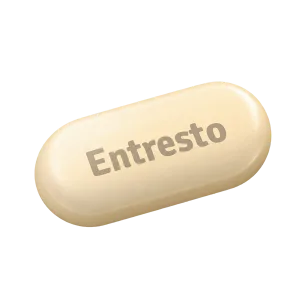
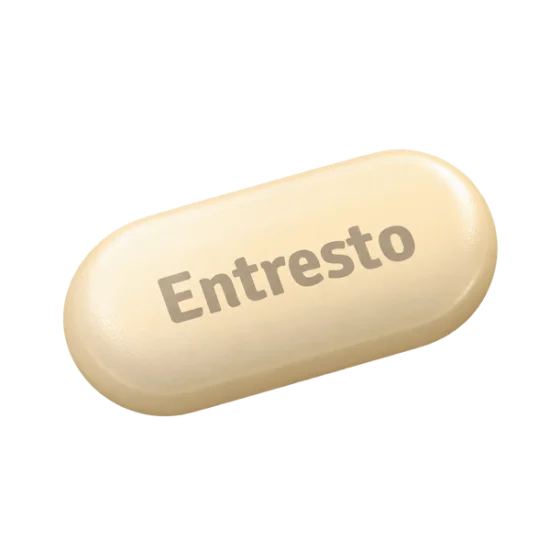
Tablets taken by mouth twice daily, with or without food, Entresto is used for selected adults with chronic heart failure. It combines sacubitril and valsartan to reduce harmful pressure and fluid-related strain on the heart. The prescribed amount is adjusted for each person.

Overview

Entresto contains the active substances sacubitril and valsartan. It is a prescription combination used in selected patients with chronic heart failure, a condition in which the heart cannot pump or fill sufficiently to meet the body’s needs.

Active ingredients and pharmacological class

Sacubitril is a neprilysin inhibitor. Valsartan is an angiotensin II receptor blocker, also called an ARB. Together, they are known as an angiotensin receptor–neprilysin inhibitor, or ARNI.

Formulation

Entresto contains the active substances sacubitril and valsartan. It is a prescription combination used in selected patients with chronic heart failure, a condition in which the heart cannot pump or fill sufficiently to meet the body’s needs. The treatment decision depends on the type of heart failure, symptoms, blood pressure, kidney function, potassium levels and previous medicines. Blood pressure and laboratory results can change during treatment. Regular follow-up helps identify whether the prescribed regimen remains suitable.

Active ingredients and pharmacological class

Sacubitril is a neprilysin inhibitor. Valsartan is an angiotensin II receptor blocker, also called an ARB. Together, they are known as an angiotensin receptor–neprilysin inhibitor, or ARNI.

Component Pharmacological role Main clinical effect
Sacubitril Neprilysin inhibitor Increases the activity of protective natriuretic peptides
Valsartan Angiotensin II receptor blocker Reduces angiotensin II-related tightening of blood vessels and fluid retention

The combined action can reduce cardiac workload and congestion in appropriate patients. It does not repair every form of heart damage, and it is not suitable for every heart failure pattern.

Approved heart failure treatment role

Entresto may reduce the risk of heart-failure-related hospitalisation and cardiovascular death in eligible patients when prescribed within an appropriate treatment plan. The New Zealand product information and Medsafe guidance should determine local prescribing decisions, including approved patient groups and formulation details, while the FDA label and NICE guidance provide additional international clinical references [1].

Heart failure treatment is usually assessed through symptoms, fluid status, blood pressure, kidney tests, potassium results and cardiac findings. A person who feels better may still need continued treatment because symptoms and underlying cardiovascular risk do not always change together.

Keep a written list of every prescription medicine, over-the-counter pain reliever, vitamin and electrolyte product before Entresto is started. Potassium-containing products are easy to overlook.

Therapeutic indications

Entresto may reduce the risk of heart-failure-related hospitalisation and cardiovascular death in eligible patients when prescribed within an appropriate treatment plan. The New Zealand product information and Medsafe guidance should determine local prescribing decisions, including approved patient groups and formulation details, while the FDA label and NICE guidance provide additional international clinical references [1].

Heart failure treatment is usually assessed through symptoms, fluid status, blood pressure, kidney tests, potassium results and cardiac findings. A person who feels better may still need continued treatment because symptoms and underlying cardiovascular risk do not always change together.

Dosage and administration

Entresto is taken orally twice daily. The amount per intake is set individually for each person rather than being one fixed number.

The prescriber selects the starting strength and adjusts it according to blood pressure, kidney function, potassium, tolerability and previous treatment. Entresto tablets can be taken with or without food, but taking doses at consistent times can make missed doses less likely.

Available strengths and titration pattern

Entresto tablet strengths represent the combined amount of sacubitril and valsartan. The number printed for the total strength is not the sacubitril amount alone.

Common formulation strengths include different combined sacubitril/valsartan tablet strengths.

A commonly described target formulation contains a higher combined amount of sacubitril and valsartan, taken twice daily, when that target is appropriate and tolerated. This is not a universal starting dose.

Some patients begin with a lower strength, especially after low blood pressure, impaired kidney function, significant liver disease or previous treatment that affects the renin–angiotensin system. Dose increases are gradual and prescriber-led. New Zealand prescribing information determines the applicable formulation and dose instructions [3].

Administration and missed-dose guidance

  • Swallow each tablet as prescribed.
  • Take the doses approximately 12 hours apart when possible.
  • Food is not required for absorption.
  • Do not take two doses together after forgetting one.
  • If the next scheduled dose is close, the missed dose is generally skipped.
  • When the correct action is unclear, obtain advice from a pharmacist or prescriber before taking an additional tablet.
Vomiting, diarrhoea, fever or very low fluid intake can make a usual Entresto dose feel stronger by increasing dizziness and blood-pressure drops. Report these problems early rather than independently changing the dose.

Do not crush, chew or split a tablet unless the New Zealand product information or a prescriber specifically permits that method for the supplied formulation. Modified or scored tablets can have different handling instructions.

Reasons not to use it

Entresto is contraindicated in patients with:

  • Previous angioedema linked to an ACE inhibitor or ARB.
  • Serious hypersensitivity to sacubitril, valsartan or an ingredient in the tablets.
  • Pregnancy or planned pregnancy, because renin–angiotensin system medicines can harm fetal kidney development.
  • Concomitant ACE inhibitor treatment.
  • A previous severe reaction requiring avoidance of valsartan or related renin–angiotensin medicines.

An ACE inhibitor washout period is required before starting Entresto. The exact interval follows the prescribing information and must be managed by the prescriber; taking both medicines too close together increases angioedema risk.

When this is not for you

Entresto is not for you if you:

  • Have had angioedema linked to a previous ACE inhibitor or ARB.
  • Have a serious allergy to sacubitril, valsartan or an ingredient in the tablets.
  • Are pregnant or planning pregnancy, because renin–angiotensin system medicines can harm fetal kidney development.
  • Are taking an ACE inhibitor at the same time.
  • Have been instructed to avoid valsartan or related renin–angiotensin medicines because of a previous severe reaction.

Seek emergency help for swelling of the face, lips, tongue or throat, severe breathing difficulty, collapse or fainting. Airway swelling can progress quickly.

Possible side effects

The side effects of sacubitril and valsartan are influenced by dose, hydration, kidney function and other heart failure medicines. Some changes are found on blood tests before symptoms develop.

Common and monitoring-related adverse effects

Possible problems include:

  • Low blood pressure
  • Dizziness or light-headedness
  • Reduced kidney function
  • Raised potassium
  • Tiredness
  • Headache
  • Cough or stomach discomfort in some patients

Rise slowly from a chair or bed if dizziness occurs. Sit down immediately if you feel faint. Persistent dizziness, unusual weakness, palpitations or reduced urine output needs prompt medical review.

Blood-test changes can be clinically important even when a person feels well. Do not stop Entresto independently because of a laboratory result or a mild symptom; the prescriber may adjust Entresto, another medicine, fluid intake or the monitoring plan.

A home blood-pressure reading taken after five minutes of quiet sitting is more useful than a reading taken immediately after climbing stairs. Record symptoms beside the reading so the prescriber can see the pattern.

Serious reactions requiring urgent care

Angioedema is uncommon but can be life-threatening. Swelling of the lips, mouth, tongue or throat requires emergency care, especially when swallowing or breathing becomes difficult.

Fainting, severe weakness, chest symptoms, confusion, a very slow heartbeat or severe palpitations also require urgent assessment. High potassium can sometimes produce few early symptoms, which is why scheduled blood tests should not be missed.

Medsafe product information identifies hypotension, kidney effects, potassium changes and angioedema among clinically relevant safety concerns. The risks need to be balanced against the expected heart failure benefit for the individual patient [4].

How it affects the body

Entresto works through two complementary pathways. Sacubitril affects the body’s natural systems for removing sodium and relaxing blood vessels, while valsartan limits a hormonal pathway that can raise vascular resistance and promote fluid retention.

Sacubitril and neprilysin inhibition

Neprilysin is an enzyme that breaks down several signalling molecules, including natriuretic peptides. These peptides encourage the kidneys to remove sodium and water and can promote relaxation of blood vessels.

Sacubitril inhibits neprilysin, allowing natriuretic peptides to remain active for longer. This supports lower vascular pressure and a lower fluid burden in suitable patients. The same pathway can influence blood pressure and kidney-related results, so monitoring remains part of treatment.

Neprilysin also acts on other vasoactive peptides, including endothelin-1. Entresto is not described as a direct endothelin-1 treatment; the relevant clinical action comes from the combined sacubitril and valsartan effects.

Valsartan and angiotensin II receptor blockade

The renin–angiotensin system begins with angiotensinogen and includes angiotensin I as a precursor. Angiotensin-converting enzyme helps form angiotensin II, which then acts at the angiotensin II receptor.

Valsartan blocks the angiotensin II receptor. This helps prevent vasoconstriction, meaning excessive narrowing of blood vessels, and reduces signals that encourage sodium retention and fluid accumulation. The mechanism can also lower blood pressure, which explains why dizziness or low blood pressure may occur during titration [2].

Common mistakes

Common patient-use errors

Taking Entresto with an ACE inhibitor. This can increase angioedema risk. The corrective action is prescriber-managed switching with the required washout period.

Doubling after a missed tablet. Two doses together can cause a sudden blood-pressure drop. Follow the missed-dose instructions rather than trying to compensate.

Stopping when symptoms improve. Better breathing does not mean the underlying heart failure risk has disappeared. Any discontinuation or dose reduction should be planned.

Ignoring potassium salt substitutes. A product used in cooking can contain enough potassium to matter when combined with Entresto, eplerenone or reduced kidney function.

Missing blood-test appointments. Potassium and kidney changes may be silent. A lack of symptoms does not confirm that monitoring is unnecessary.

Tell the treating team about falls, repeated light-headedness, ankle swelling, sudden weight change or reduced urine. These details can influence the next treatment decision more than a single isolated blood-pressure reading.

Comparison

Heart failure treatment uses several medicine classes with different roles. Entresto is not automatically interchangeable with another option, and a switch should be managed by the prescriber.

Medicine class or examples Pharmacological role Main limitation
ACE inhibitors or ARBs, including fosinopril, losartan and valsartan Reduce renin–angiotensin signalling Cough, low blood pressure, kidney effects or high potassium
Mineralocorticoid receptor antagonists, including eplerenone and Inspra Reduce aldosterone-related sodium retention and cardiac remodelling High potassium and kidney monitoring
SGLT2 inhibitors, including Farxiga and Jardiance Promote glucose and sodium excretion with heart failure benefits Volume depletion and genital or urinary adverse effects

ACE inhibitors such as Altace, Accupril, Zestril and Vasotec may be used in some treatment plans. ARBs such as Atacand, Diovan, Cozaar and losartan may be considered when an ACE inhibitor is unsuitable. These choices have different transition rules and must not be combined casually with Entresto.

Eplerenone and Inspra are names associated with the mineralocorticoid receptor antagonist approach. Farxiga and Jardiance belong to the SGLT2 inhibitor class. Kidney function, potassium, blood pressure, diabetes status, ejection fraction and symptoms all influence the selection.

What doctors say

In clinical practice, prescribers usually judge Entresto by a combination of symptoms, blood pressure, kidney tests, potassium and the patient’s complete heart failure regimen. A person may breathe more comfortably yet still require dose review, while another person may have no obvious symptom change despite clinically meaningful treatment benefit.

Clinical monitoring during titration

What doctors check includes:

  • Sitting and standing blood pressure
  • Dizziness, fainting and falls
  • Kidney function
  • Serum potassium
  • Swelling, breathlessness and exercise tolerance
  • Other medicines that affect blood pressure, kidney function or electrolytes

The aim is to reach a useful tolerated dose without creating symptomatic hypotension, dangerous potassium elevation or kidney deterioration. Response varies, so there is no universal day on which every patient should expect a result.

Comparison

Arjuna

Active ingredient: Terminalia arjuna
250mg
From $ 251.92
pills
3.5 (5)

Digoxin

Active ingredient: Digoxin
0.25mg
From $ 176.72
pills
4.3 (4)

Entresto Current

Active ingredient: Valsartan
24mg26mg
From $ 214.32
tablets
3.5 (4)

Inspra

Active ingredient: Eplerenone
25mg 50mg
From $ 417.36
pills
3.9 (4)

Compare all medicines for Heart Disease

Common questions

Can Entresto affect driving, concentration or work with machinery?

Entresto can cause dizziness, low blood pressure or faintness, especially after starting treatment or increasing the dose. Medsafe information available in 2026 supports avoiding driving or machinery work until you know how the tablets affect alertness and balance. If you feel light-headed, sit down and do not drive until the symptom has resolved and the treatment has been reviewed where needed.

Is Entresto suitable for older adults?

Older adults may use Entresto when the prescriber considers it appropriate, but kidney function, blood pressure, hydration and other medicines need careful review. Medsafe guidance in 2026 supports individual dose selection rather than an age-only rule. Falls, reduced appetite, diarrhoea and confusion should be reported because they can signal low blood pressure, dehydration or a metabolic problem.

Can an Entresto tablet be split, crushed or chewed?

The tablet should be swallowed as directed unless the local product information or prescriber gives different instructions. The New Zealand product information reviewed through Medsafe in 2026 should guide handling of the specific supplied strength. Crushing or chewing without confirmation can make administration inaccurate and may be unsuitable for the formulation.

What should I do after missing an Entresto dose?

Do not take two tablets together to compensate. Medsafe advice in 2026 supports following the timing instructions in the New Zealand product information, with the next step depending on how close the next scheduled dose is. When timing is uncertain, a pharmacist or prescriber can confirm whether to skip the missed dose.

What should I do if the expected result does not come?

Heart failure symptoms can reflect fluid retention, rhythm problems, infection, kidney changes or another cause, so a lack of improvement needs clinical review rather than an extra tablet. The 2025 European Medicines Agency product information describes Entresto within an indicated heart failure treatment strategy, yet individual response varies. Worsening breathlessness at rest, chest pain, fainting or rapidly increasing swelling requires urgent medical assessment.

What should be checked before starting Entresto?

Before starting, discuss previous angioedema, pregnancy or pregnancy plans, kidney disease, liver disease, high potassium, low blood pressure and every medicine or supplement being used. Medsafe product information in 2026 gives specific importance to ACE-inhibitor washout and interaction review. Include NSAIDs, lithium, eplerenone, potassium supplements and salt substitutes in the medication history.

Do you offer anonymous delivery?

Your order will be securely packed and shipped within 24 hours. This is exactly what your package will look like (images of an actual item sent). It has the size and look of a regular private letter (24x11x0.7 cm) and its contents cannot be seen.

Sources

  1. European Medicines Agency (2025). Entresto: EPAR product information for sacubitril/valsartan.
  2. European Medicines Agency (2025). Entresto: Summary of Product Characteristics.
  3. Medsafe (2025). New Zealand data sheet: Entresto tablets.
  4. Medsafe (2025). Entresto consumer medicine information.

Reviews: Entresto

3.5
Based on 4 reviews
Michael, 51 Whanganui Six weeks
Verified
Rating: 3.5 out of 5

My breathing during short walks improved after the dose was adjusted. The first week brought dizziness when I stood up quickly, so I started rising more slowly. My blood tests were repeated and the potassium stayed acceptable.

9 Oct 2026
Luke, 60 Oamaru Three weeks
Verified
Rating: 3.5 out of 5

I felt washed out and had two low-blood-pressure readings. The treatment was reviewed rather than stopped on my own. I was disappointed that the first dose did not suit me, but the later plan was easier to tolerate.

18 Oct 2026
John C., 47 Upper Hutt Four months
Verified
Rating: 3.5 out of 5

I had already been taking several heart medicines, so the change was not instant. My swelling reduced over the following weeks, and I kept a note of my readings. Remembering the evening tablet was the part I struggled with.

24 Oct 2026
Adam, 45 Dunedin Two months
Verified
Rating: 3.5 out of 5

Entresto fitted my treatment plan, but I noticed light-headedness after a stomach bug. The advice was to report the dehydration rather than take extra fluids or alter tablets blindly. The follow-up blood test helped clarify what was happening.

6 Nov 2026
Get our free app Shop faster and track your orders 3.8 · 361 reviews Install