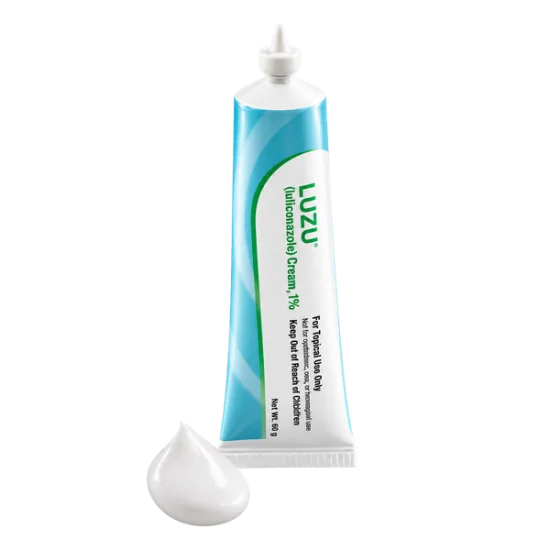
The redness and itch eased after several applications. I was initially putting on far too much, so the thin layer made the tube last longer and felt less greasy.
Luzu is a topical corticosteroid cream applied in a thin layer to affected skin for short-term treatment of steroid-responsive inflammatory conditions. It contains dexamethasone 0.1%, which reduces inflammation, redness, swelling and itching when the diagnosis is appropriate.
Overview
Luzu is a topical corticosteroid containing dexamethasone 0.1%. It may be prescribed for short-term management of inflammatory skin conditions such as diagnosed dermatitis or eczema flares. Dexamethasone acts on local inflammatory processes, helping calm redness, heat, swelling and itch.
Formulation
The active ingredient is dexamethasone 0.1%. The percentage describes the concentration of dexamethasone in the cream; it is not an instruction to adjust the amount independently.
Luzu is supplied as a cream in tubes. Apply only the amount and frequency directed by the prescriber or the product directions for the condition being treated.
Therapeutic indications
Luzu may be used for short-term treatment of diagnosed steroid-responsive inflammatory skin conditions. The clinical decision depends on the body site, severity, patient age, skin condition and likely cause of the rash.
Dermatitis and eczema flares can produce itching, redness and scaling. A topical corticosteroid may calm the inflammatory component, while emollient care supports the skin barrier.
Inflammatory Dermatitis and Eczema Flares
A clinician may select dexamethasone when inflammation requires topical corticosteroid treatment. The suitable duration depends on the treated area and the response.
Emollients may help reduce dryness and support the barrier between applications. They do not replace assessment when the rash is painful, infected-looking or repeatedly returning.
Dosage and administration
Apply a thin layer of Luzu to the affected skin according to the prescribed or labelled schedule. The correct amount and duration vary between users and strengths, so there is no single amount that suits everyone.
- Wash and dry your hands before application.
- Apply the cream sparingly to affected skin.
- Avoid the eyes, lips and mucous membranes.
- Wash your hands afterwards unless the hands are being treated.
- Keep the cream away from children’s eyes and mouths.
- Do not extend the course because itching remains.
- Do not use leftover cream for a new rash without assessment.
Thin-Layer Application
A thin film is generally sufficient for topical corticosteroid application. Rubbing vigorously is unnecessary and may irritate inflamed skin.
Use the prescribed schedule rather than applying extra cream after a missed application. Dexamethasone 0.1% is not intended to be applied more often simply because symptoms are uncomfortable.
Area-Specific Precautions
Facial skin, skin folds and other sensitive areas may absorb corticosteroids more readily. Broken or damaged skin can also increase absorption. These sites may require a different treatment choice, shorter exposure or closer clinical review.
Reasons not to use it
Luzu is not suitable for everyone with an itchy or red patch. This medication is not for you if the rash has not been assessed and may be caused by an untreated infection, or if you have previously reacted to dexamethasone or another component of the cream.
Use extra caution with:
- Suspected bacterial, viral or fungal skin infection.
- Untreated acne or rosacea-like facial inflammation.
- Facial skin, eyelids or skin close to the eyes.
- Broken, ulcerated or severely damaged skin.
- Large treatment areas.
- Children, especially when large areas are involved.
- Occlusive dressings or tight coverings.
- A history of skin thinning after topical corticosteroid use.
When this is not for you
This medication is not for you if the rash has not been assessed and may be caused by an untreated infection, or if you have previously reacted to dexamethasone or another component of the cream.
Avoid applying Luzu to the eyes, eyelids, lips or mucous membranes unless a clinician has given specific instructions. Accidental eye exposure should be rinsed with clean water.
Possible side effects
Possible local effects include burning, irritation, dryness, folliculitis, skin thinning, stretch marks and changes in pigmentation. Risk rises with prolonged treatment, repeated courses, large areas, damaged skin and occlusion. The EMA identifies these as recognised considerations for topical corticosteroid use [2].
Local Skin Reactions
Mild stinging or irritation can occur after application, especially on already damaged skin. Persistent burning, increasing redness, worsening itch or a new rash should be assessed.
Skin atrophy means thinning or increased fragility. Fine stretch marks, easy bruising, visible small blood vessels and shiny skin are warning changes rather than signs to treat with more cream.
Systemic Absorption Warning Signs
Systemic corticosteroid exposure is uncommon with appropriate short-term topical use, yet the possibility increases with children, extensive treatment areas, broken skin and occlusion. Unusual weakness, marked swelling, visual symptoms or other unexpected changes need medical review.
How it affects the body
Dexamethasone enters skin cells and activates corticosteroid receptors. This changes the activity of genes involved in inflammatory signalling and reduces the release of inflammatory mediators. The result can be less redness, swelling, warmth and itching.
Topical corticosteroid treatment acts mainly at the application site, though absorption can rise when large areas, damaged skin or occlusive dressings are involved. Medsafe, the FDA, NICE and other medicines authorities describe these factors as relevant when assessing topical corticosteroid exposure [1].
Inflammatory Signalling Suppression
Inflammatory mediators are chemical signals that help produce redness, swelling and itch during skin inflammation. Dexamethasone suppresses several of these signals, so symptoms may settle while the skin recovers.
Local Skin Action and Systemic Exposure
Luzu is applied to the skin, but topical treatment is not automatically risk-free. Absorption is more likely when the cream is used over extensive areas, under tight coverings, on broken skin, or for longer than advised.
Common mistakes
Several practical errors reduce the benefit of Luzu or increase exposure:
- Applying a thick layer instead of a thin film.
- Using the cream on every itchy rash.
- Continuing after the advised course has ended.
- Covering the area with an airtight dressing.
- Applying it close to the eyes.
- Using it on untreated acne or rosacea-like facial changes.
- Sharing the tube with another person.
- Reusing leftover cream for a different rash.
- Forgetting to wash hands after treating someone else.
- Applying it to unaffected skin “for prevention.”
Children may touch treated areas and then rub their eyes or mouth. Wash hands after application and avoid allowing close skin-to-skin contact until the cream has been absorbed.
Comparison
Treatment categories have different purposes. Choosing between them depends on the cause of the skin problem, not only on whether the rash itches.
| Treatment category | Primary role and limitation |
|---|---|
| Topical corticosteroid such as Luzu | Reduces inflammatory signalling; may worsen or mask some untreated infections |
| Topical antifungal | Targets fungal organisms; does not replace corticosteroid treatment for diagnosed inflammation |
| Emollient or topical calcineurin inhibitor | Emollients support the skin barrier; calcineurin inhibitors modify local immune activity in selected conditions |
Corticosteroid and Antifungal Roles
A topical corticosteroid targets inflammation. A topical antifungal targets fungal organisms. These roles are not interchangeable, and the wrong category may delay improvement.
A spreading scaly rash, persistent ring-shaped lesion or worsening rash after steroid application needs professional review rather than repeated application.
Corticosteroid and Barrier-Care Roles
Emollients reduce dryness and support the skin barrier. They do not provide the same anti-inflammatory action as dexamethasone.
Topical calcineurin inhibitors are used in selected inflammatory skin conditions and are chosen according to site, diagnosis and treatment history. Switching categories without advice can lead to poor control or avoidable irritation.
What doctors say
Clinicians select a topical corticosteroid by balancing potency, body site, disease severity, patient age, duration and recurrence pattern. Dexamethasone may be useful when the inflammatory diagnosis supports corticosteroid treatment, but the same approach is not suitable for every rash.
In practice, treatment failure has several possible explanations: the diagnosis may be wrong, the application may be inconsistent, the trigger may still be present, or the condition may need a different treatment category. Repeated flares deserve reassessment rather than indefinite self-treatment.
The WHO describes rational medicine use as selecting treatment according to the clinical condition, patient factors and appropriate duration [3]. For Luzu, that means limiting application to the affected area and monitoring the skin response.
A clinician may review the diagnosis when the rash spreads, becomes painful, develops discharge, affects the eyes, or returns soon after treatment ends. The need for review is stronger when a child, large area or damaged skin is involved.
Comparison
Common questions
What should I do after a missed Luzu application?
Apply Luzu when you remember unless the next scheduled application is close; in that situation, skip the missed application and resume the usual schedule. Do not apply a thick layer to compensate. Medsafe patient-safety guidance published in 2025 supports avoiding extra topical doses after a missed application because increased quantity does not provide reliable additional benefit [4].
Which symptoms mean I should stop Luzu and seek urgent medical advice?
Stop applying the cream and seek prompt medical assessment for rapidly spreading redness, severe pain, pus, facial swelling, blistering, fever or a serious allergic reaction. Eye pain, vision change or persistent irritation after accidental exposure also needs urgent assessment. The EMA’s 2024 safety information for topical corticosteroids treats infection, significant skin deterioration and eye complications as reasons for clinical review [5].
How soon should Luzu’s effect become noticeable?
Redness, itch or swelling may begin to improve during the treatment period when the condition is genuinely steroid-responsive. The timing varies with diagnosis, severity, body site and application technique. WHO dermatology information from 2023 supports reassessment when an inflammatory skin condition fails to improve as expected rather than escalating the amount independently.
How long does one Luzu application keep working?
The duration of effect after one application varies and cannot be predicted by the concentration alone. Continue according to the prescribed or labelled schedule rather than applying extra cream whenever symptoms briefly return. Medsafe topical-corticosteroid guidance from 2025 emphasises using the shortest appropriate course for the treated condition.
Can I drink alcohol while using Luzu?
Alcohol does not have the same direct interaction concern with topical dexamethasone as it does with some oral medicines. Excessive alcohol can still worsen sleep, scratching and self-care, which may make an inflammatory skin condition harder to manage. Medsafe information from 2025 supports focusing on the application site, treatment duration and any other medicines used at the same time.
Do you offer anonymous delivery?
Your order will be securely packed and shipped within 24 hours. This is exactly what your package will look like (images of an actual item sent). It has the size and look of a regular private letter (24x11x0.7 cm) and its contents cannot be seen.
Sources
- Medsafe (2021). Approved product information for topical corticosteroids
- European Medicines Agency (2020). Summary of Product Characteristics (SmPC) — dexamethasone
- World Health Organization (1994). Guide to Good Prescribing
- Medsafe (2021). Approved product information for dexamethasone topical preparations
- European Medicines Agency (2020). Summary of Product Characteristics (SmPC) — topical corticosteroids
Reviews: Luzu
The irritation settled, but it came back when I stopped. The cream helped the symptoms, although I still needed the cause checked rather than continuing it indefinitely.
The skin looked calmer within the first part of the course. I noticed mild dryness afterwards and used a plain moisturiser separately, which was more comfortable.
It reduced the redness quickly, but the area became more sensitive. I stopped putting it near my eye and arranged a review instead of carrying on.
The first course was useful, but the rash returned later. It became clear that repeating the same cream was not enough without working out what was triggering it.