Skip to content
Micogel
Active ingredient: Miconazole

Micogel

Quality products
24/7 Support
Fast delivery
Delivery from 4 days
Select pack Package Per unit Price

Free delivery on orders from $ 376.00, free express delivery from $ 564.00

Secure Payments
Track your order
Best price guarantee

Patients with superficial fungal infections of the external skin may use Micogel as a topical antifungal cream. Micogel contains miconazole nitrate 2% w/w, which limits fungal growth in areas such as skin folds and other affected skin.

Overview

Micogel contains miconazole nitrate 2% w/w, which limits fungal growth in areas such as skin folds and other affected skin. Miconazole belongs to the imidazole antifungal group and is used for susceptible fungal and yeast infections of the skin, including some Candida infections.

Formulation

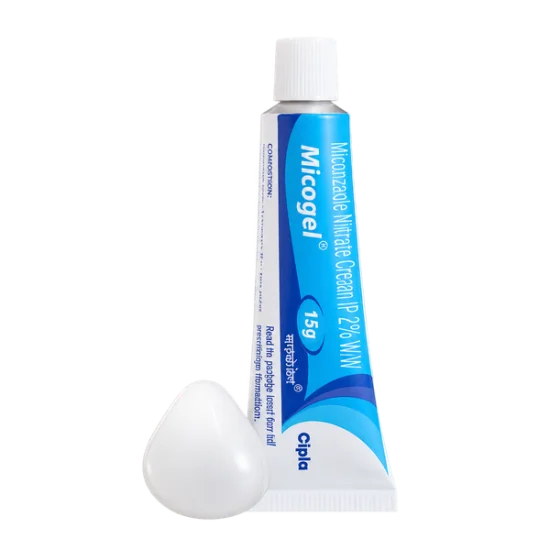
Micogel is a tube-administered cream containing miconazole nitrate 2% w/w. The product information identifies Micogel as a cream containing miconazole nitrate 2% w/w. It does not establish Micogel as an oral, vaginal or eye treatment.

Micogel Cream and Other Topical Formulations

Micogel contains miconazole nitrate 2% w/w and is supplied as a cream in a tube. A cream containing only miconazole has a different pharmacological role from an antifungal product that also contains a corticosteroid.

Formulation Active ingredient and role Main precaution
Micogel cream Miconazole nitrate 2% w/w; antifungal action Use on external skin and avoid the eyes
Antifungal plus steroid product Antifungal combined with a topical corticosteroid Steroid exposure requires site and duration limits
Plain topical steroid Anti-inflammatory action without antifungal treatment Does not treat fungal infection

Micogel is not a steroid-containing product based on the stated composition. It should not be treated as interchangeable with a combination ointment containing miconazole and fluocinolone.

If a rash becomes less red after a steroid has been used, that colour change can reflect suppressed inflammation rather than clearance of the fungus. Avoid adding or switching to a steroid combination without a specific diagnosis.

Therapeutic indications

Potential advantages include direct application to affected external skin, suitability for some superficial fungal and yeast infections, and a formulation without a corticosteroid. A limitation is that Micogel does not treat every rash and may cause local irritation.

Examples of conditions that may respond to topical miconazole include:

  • Superficial Candida infection affecting moist skin folds.
  • Some forms of athlete’s foot.
  • Ringworm affecting the body.
  • Tinea cruris, also called jock itch.
  • Other superficial fungal infections confirmed by a clinician.

A rash does not automatically mean a fungal infection. Eczema, psoriasis, contact dermatitis and bacterial infections can produce itching, redness or scaling. Using an antifungal on the wrong diagnosis can delay suitable treatment.

Micogel Cream Uses

Micogel Cream may be used on external skin affected by susceptible fungal or yeast organisms. Candida infections are more likely to develop in warm, moist areas, including skin folds, where friction and trapped moisture can irritate the skin.

Wash and dry the affected area before application. Drying between skin folds deserves attention because residual moisture can support fungal persistence.

Use a separate towel for the affected area and wash towels, underwear and clothing regularly during treatment. Shared or damp fabric can increase skin-to-skin spread and reinfection.

Dosage and administration

Micogel Application and Treatment Instructions

Apply Micogel to clean, dry external skin according to the prescribed frequency and treatment duration. The dose is decided individually, taking age, other medicines and health conditions into account.

  • Wash your hands before application.
  • Gently clean the affected skin and dry it carefully.
  • Apply a thin layer over the affected area.
  • Avoid the eyes, mouth and other mucous membranes.
  • Wash your hands after application unless the hands are the treatment site.
  • Do not cover the area with an airtight dressing unless prescribed.
  • Continue for the instructed duration, even if itching improves earlier.
  • If an application is missed, apply it when remembered unless the next scheduled application is close; do not apply a thick or doubled layer.

A thin layer is sufficient. Applying more cream does not make miconazole work faster and may increase irritation.

Moist skin folds should be dried by patting rather than vigorous rubbing. Tight clothing can increase heat, friction and moisture around the treatment area.

Do not apply Micogel immediately after vigorous scrubbing, shaving or use of a fragranced product on the same area. Irritated skin can sting more when the cream is applied.

Treatment length depends on the diagnosis, body site, extent of infection and response. Stopping as soon as the itching improves can allow fungal growth to return. Persistent scaling, recurrent infection or an expanding border needs clinical reassessment rather than repeated indefinite self-treatment.

Reasons not to use it

Micogel is not suitable for people with a known allergy to miconazole, other imidazole antifungals or an excipient in the formulation. Avoid applying it to the eyes, inside the mouth or to internal body sites unless a specific product is authorised for that use.

Drug interactions are less likely with limited topical use than with oral medicines, yet the risk can rise when treatment covers large areas, damaged skin or occluded skin. Tell the prescriber about warfarin use, because systemic absorption of topical miconazole is usually low but clinically relevant interaction concerns have been reported with some topical miconazole preparations.

When this is not for you

Micogel is not for you if:

  • You have previously developed a serious reaction to miconazole.
  • The affected area is near the eye and treatment has not been specifically advised.
  • The skin is severely broken, ulcerated or infected with pus.
  • The diagnosis is uncertain and the rash is rapidly changing.
  • You plan to cover the area with an airtight dressing without medical direction.
  • The treatment area is extensive, recurrent or associated with fever.

Children, pregnancy and breastfeeding require attention to the treatment site and duration. The New Zealand Medicines and Medical Devices Safety Authority, Medsafe, places emphasis on using topical medicines according to product-specific directions and avoiding inappropriate exposure [3].

Large treatment areas can increase medicine exposure. Steroid-containing products require additional restrictions on the face, eyelids, groin, skin folds, open wounds and covered areas because prolonged use can thin the skin, cause visible blood vessels or mask infection. Those steroid precautions apply to products containing fluocinolone or another corticosteroid, not to the stated miconazole-only composition of Micogel.

Stop applying the cream and seek urgent medical help for:

  • Facial, lip, tongue or throat swelling.
  • Breathing difficulty or wheezing.
  • Widespread blistering or peeling.
  • Severe burning that does not settle.
  • Rapidly spreading rash.
  • Pus, increasing warmth or marked tenderness suggesting secondary infection.

Possible side effects

Topical miconazole can cause local skin reactions. Reported effects may include:

  • Burning or stinging.
  • Itching.
  • Redness.
  • Irritation.
  • Rash.
  • Dryness or discomfort at the application site.

These reactions may be mild and short-lived, yet worsening redness can also indicate irritant contact dermatitis or an allergic reaction. A new rash around the treated area does not automatically mean the fungal infection is spreading.

Headache has been reported with some topical antifungal products, although a headache is not the usual local skin reaction. A severe or persistent headache needs medical assessment, especially when it occurs with other concerning symptoms.

Miconazole can also irritate damaged skin. Applying it to open wounds or severely broken skin may increase discomfort.

How it affects the body

Miconazole is an imidazole antifungal that interferes with the production of ergosterol, a key component of many fungal cell membranes. Disrupting this membrane process limits fungal growth and can lead to loss of fungal cell integrity [1].

Miconazole acts against susceptible fungi and yeasts. It is not a general treatment for viruses, and it should not be assumed to treat every bacterial skin infection.

Miconazole Antifungal Action

Fungal cells rely on membrane components that differ from human cell membranes. Miconazole interferes with fungal sterol production, weakening the organism’s membrane structure. The clinical response can take time, especially when the affected area is extensive, repeatedly exposed to moisture or affected by friction.

Redness and itching may ease before the organism has been fully cleared. A smoother-looking rash does not always prove that treatment can be stopped immediately.

The World Health Organization describes superficial fungal infections as conditions that commonly affect the skin, hair and nails, with treatment depending on the organism, location and extent of infection [2].

Topical Corticosteroid Considerations

Micogel, as identified by its active ingredient, is a miconazole cream. Fluocinolone is a topical corticosteroid found in some separate combination products, but it is not listed as an active ingredient for the Micogel product described here.

A topical corticosteroid is a medicine applied to the skin to reduce inflammatory activity. Steroids can reduce redness and itching, yet they do not kill fungi. Using a steroid-containing combination on an undiagnosed rash may mask infection and change its appearance.

Do not add a corticosteroid cream to Micogel unless a prescriber has specifically directed that combination. Facial skin, eyelids, groin skin and skin folds absorb topical steroids more readily than thicker areas such as the palms.

Common mistakes

Several application habits can reduce treatment success or increase irritation:

  • Applying a thick layer in the belief that more cream works faster.
  • Putting the cream on damp skin folds.
  • Stopping when itching improves while scaling remains.
  • Covering the area with plastic or a tight dressing.
  • Sharing towels, clothing or sports equipment.
  • Applying fragranced products over irritated skin.
  • Using a steroid combination for every red or itchy rash.
  • Applying the cream to eyelids, inside the ear or mucous membranes without specific advice.
  • Treating only the most visible area when an associated fungal site is present.
Wash hands after touching the affected area, even before applying cream. This reduces transfer from one body site to another and limits spread to household surfaces.

Miconazole targets fungal growth. It does not instantly repair friction damage, moisture irritation or cracked skin. Fluocinolone reduces redness when present in a separate combination product, but reduced redness alone does not confirm fungal clearance.

Comparison

Alternative Antifungal Treatments

Miconazole and clotrimazole are both topical imidazole antifungals. Either may be used for susceptible superficial fungal infections, including some cases of tinea cruris, also called jock itch. They are not automatically interchangeable in every situation.

Active ingredient Pharmacological role Practical consideration
Miconazole Imidazole antifungal Used for susceptible fungal and yeast infections
Clotrimazole Imidazole antifungal Used for several superficial fungal infections
Topical corticosteroid Reduces inflammation Does not eliminate fungi and may mask infection

Product choice depends on the confirmed or likely organism, body site, skin sensitivity, previous treatment, age and local clinical guidance. A steroid combination is not a routine choice for every itchy groin rash.

Tinea cruris usually affects the groin and upper inner thighs while sparing much of the scrotal skin. Keeping the area dry, changing damp clothing and treating a confirmed associated foot infection can reduce recurrence. Persistent or atypical symptoms need reassessment because psoriasis, eczema, bacterial infection and contact dermatitis can resemble jock itch.

The European Medicines Agency provides product-specific safety and use information through regulatory medicine documentation. The U.S. Food and Drug Administration and NICE also publish medicine safety or clinical guidance relevant to treatment decisions.

What doctors say

In clinical practice, the first useful distinction is between a likely superficial fungal infection and a rash with another cause. Miconazole can inhibit susceptible fungal growth, yet it cannot correct an incorrect diagnosis.

A doctor or pharmacist will usually consider the body site, border of the rash, scaling, moisture, recurrence and response to previous treatment. Repeated treatment failure can mean the organism is not susceptible, the diagnosis is wrong, the area is being reinfected or the treatment is not reaching the affected skin consistently.

One practical point is easy to miss: the skin around a fungal rash may remain irritated after fungal growth has reduced. Scrubbing harder can worsen the barrier and increase burning.

Another is the role of foot infection. A person may clear groin symptoms temporarily while an untreated fungal infection between the toes continues to spread organisms back to clothing and skin.

Comparison

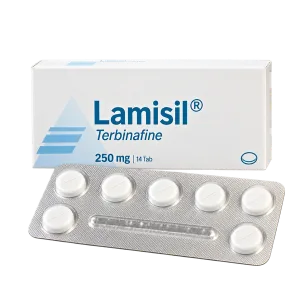
Lamisil

Active ingredient: Terbinafine
250mg
From $ 231.24
pills
3.3 (4)

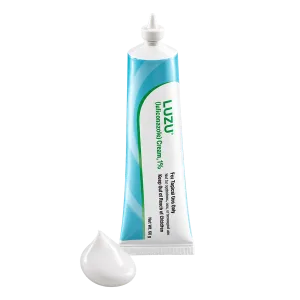
Luzu

Active ingredient: Luliconazole
1%
From $ 186.12
tubes
4.2 (5)

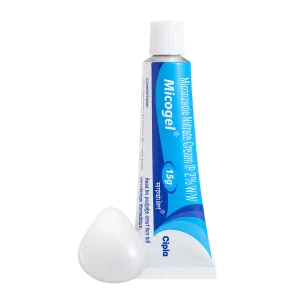
Micogel Current

Active ingredient: Miconazole
2%
From $ 148.52
tubes
4 (5)

Compare all medicines for Antifungals

Common questions

How much Micogel should be applied, where should it go, and should hands be washed?

Apply a thin layer to clean, dry external skin, covering the affected area rather than piling cream onto it. Wash hands before and after application, unless the hands are the treatment site. Do not cover the area with an airtight dressing unless prescribed. Medsafe's 2024 data sheet and consumer medicine information for topical miconazole support following product-specific directions.

Can I go in the sun while using Micogel?

Normal outdoor activity is not automatically prohibited when using topical miconazole, but protect irritated skin from excessive sun, heat and friction. Stop using fragranced products that sting the area, and cover the treated site with clothing when practical rather than applying extra cream. Medsafe's 2024 data sheet and consumer medicine information for topical miconazole supports monitoring for worsening irritation.

What should I do if the expected result does not appear?

Do not keep applying thicker layers or add a steroid cream without assessment. Persistent symptoms may reflect an incorrect diagnosis, reinfection, resistant organisms, irritation or a second skin condition. The World Health Organization's 2023 Model List of Essential Medicines supports using appropriate medicines and reassessing treatment when a presumed infection does not respond as expected.

Can Micogel affect driving, concentration or work with machinery?

Topical miconazole is not expected to impair driving, concentration or routine work with machinery when used on limited external skin. Pain, severe itching, a widespread reaction or a headache may still make work unsafe, even if the medicine itself is not sedating. Medsafe's 2024 data sheet and consumer medicine information advises attention to individual adverse reactions rather than assuming every user will respond identically.

Which symptoms mean I should stop Micogel and seek urgent medical help?

Stop treatment and seek urgent help for facial or throat swelling, breathing difficulty, widespread blistering, rapidly spreading rash or severe burning. Pus, increasing warmth, marked tenderness or fever can indicate a secondary infection and also needs prompt medical assessment. The European Medicines Agency's 2022 Summary of Product Characteristics identifies severe hypersensitivity symptoms as requiring urgent attention.

How long does a Micogel course last, and is long-term use acceptable?

The course length depends on the diagnosis, treatment site and clinical instructions; there is no single duration suitable for every rash. Long-term unsupervised use is inappropriate when symptoms persist, because the diagnosis may need to be reconsidered. The World Health Organization's 2023 Model List of Essential Medicines supports targeted treatment based on the condition and appropriate medicine rather than indefinite repeated use.

Can diet, exercise or daily habits help or hinder the result?

Keeping affected skin dry, changing damp clothing and avoiding shared towels can support treatment. Exercise is possible, but sweat, friction and tight clothing may worsen irritation, so showering and drying the area afterwards is useful. Medsafe's 2024 data sheet and consumer medicine information supports reducing moisture and friction around affected skin.

Do you offer anonymous delivery?

Your order will be securely packed and shipped within 24 hours. This is exactly what your package will look like (images of an actual item sent). It has the size and look of a regular private letter (24x11x0.7 cm) and its contents cannot be seen.

Sources

  1. Medsafe (2024). Data Sheet and Consumer Medicine Information — topical miconazole cream
  2. World Health Organization (2023). WHO Model List of Essential Medicines, 23rd list
  3. Medsafe (2023). Data Sheet and Consumer Medicine Information — topical miconazole cream

Reviews: Micogel

4
Based on 5 reviews
Charlotte A., 66 Taupō The prescribed period
Verified
Rating: 5 out of 5

The cream was easy to spread and the itching settled after several days. I still had to keep the area dry, because the irritation returned when I wore damp clothing.

8 Nov 2026
Sophie, 34 Timaru
Verified
Rating: 4 out of 5

The burning was noticeable during the first applications but did not last long. The rash improved gradually rather than overnight, and using a separate towel seemed sensible.

15 Nov 2026
Kerry, 65 Nelson
Verified
Rating: 3.5 out of 5

The scaling reduced, but I stopped too early when it looked better. The symptoms came back, so the treatment course had to be reviewed.

18 Oct 2026
Elaine, 27 Lower Hutt
Verified
Rating: 5 out of 5

The cream was not difficult to use, and the skin felt less irritated after a few days. I disliked the slight stickiness and had to wait before getting dressed.

27 Oct 2026
Alison, 43 Whangārei
Verified
Rating: 2.5 out of 5

It helped the itching, but the redness continued and the area became more sensitive. Medical review showed that the rash needed a different approach rather than more antifungal cream.

4 Nov 2026
Get our free app Shop faster and track your orders 3.8 · 361 reviews Install